OFFRE LISEUSES
Une liseuse achetée = une housse offerte* jusqu'au 21 juin

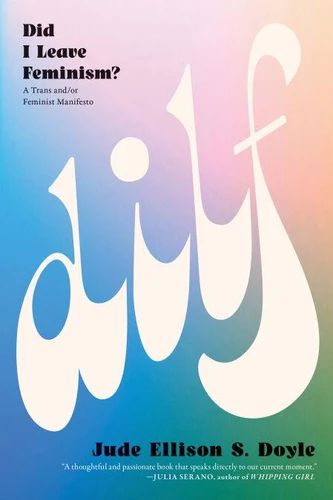
DILF. Did I Leave Feminism?
Par :Formats :
Disponible dans votre compte client Decitre ou Furet du Nord dès validation de votre commande. Le format ePub protégé est :
- Compatible avec une lecture sur My Vivlio (smartphone, tablette, ordinateur)
- Compatible avec une lecture sur liseuses Vivlio
- Pour les liseuses autres que Vivlio, vous devez utiliser le logiciel Adobe Digital Edition. Non compatible avec la lecture sur les liseuses Kindle, Remarkable et Sony
- Non compatible avec un achat hors France métropolitaine
 , qui est-ce ?
Notre partenaire de plateforme de lecture numérique où vous retrouverez l'ensemble de vos ebooks gratuitement
Pour en savoir plus sur nos ebooks, consultez notre aide en ligne ici
C'est si simple ! Lisez votre ebook avec l'app Vivlio sur votre tablette, mobile ou ordinateur :

- Nombre de pages224
- FormatePub
- ISBN978-1-68589-216-6
- EAN9781685892166
- Date de parution21/10/2025
- Protection num.Adobe DRM
- Taille714 Ko
- Infos supplémentairesepub
- ÉditeurMelville House
Résumé
In this sharp manifesto, veteran author and activist, Jude Doyle, reunites feminist and trans politics through a common belief: that all people deserve to have the final say about who they are.When Jude Doyle began his transition in the summer of 2020, he had a very public career as a feminist-winning awards from women's organizations, writing for women's magazines, publishing books on "women's issues." Then, after a decade in the movement, he had to walk out in front of the public and tell them he had never been a woman at all.
Doyle offers a seldom-heard and much-needed transmasculine perspective on feminist subjects, drawing together strands of intersectional feminist theory and queer and trans politics to show that all their struggles are the same struggle: The fight for gender-marginalized people to maintain autonomy and full selfhood in a patriarchy that is always eager to hollow us out and use us to further its own agenda.
DILF offers a strong rebuke to trans-exclusionary feminisms that seek to drive a wedge between gender-marginalized communities. Using interviews, critical analysis, and Doyle's own personal experience, DILF proves that feminism is a vital and necessary tool for breaking free of patriarchal control, whoever you are.
Doyle offers a seldom-heard and much-needed transmasculine perspective on feminist subjects, drawing together strands of intersectional feminist theory and queer and trans politics to show that all their struggles are the same struggle: The fight for gender-marginalized people to maintain autonomy and full selfhood in a patriarchy that is always eager to hollow us out and use us to further its own agenda.
DILF offers a strong rebuke to trans-exclusionary feminisms that seek to drive a wedge between gender-marginalized communities. Using interviews, critical analysis, and Doyle's own personal experience, DILF proves that feminism is a vital and necessary tool for breaking free of patriarchal control, whoever you are.