
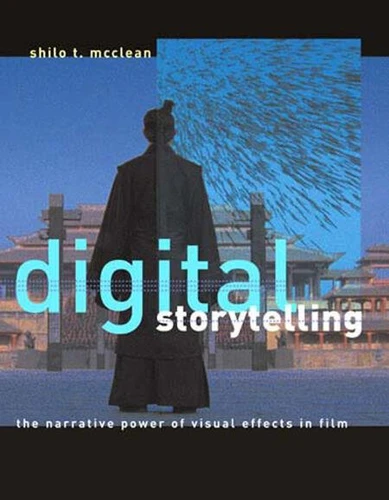
Digital Storytelling. The Narrative Power of Visual Effects in Film
Par :Formats :
Disponible dans votre compte client Decitre ou Furet du Nord dès validation de votre commande. Le format ePub protégé est :
- Compatible avec une lecture sur My Vivlio (smartphone, tablette, ordinateur)
- Compatible avec une lecture sur liseuses Vivlio
- Pour les liseuses autres que Vivlio, vous devez utiliser le logiciel Adobe Digital Edition. Non compatible avec la lecture sur les liseuses Kindle, Remarkable et Sony
- Non compatible avec un achat hors France métropolitaine
 , qui est-ce ?
Notre partenaire de plateforme de lecture numérique où vous retrouverez l'ensemble de vos ebooks gratuitement
Pour en savoir plus sur nos ebooks, consultez notre aide en ligne ici
C'est si simple ! Lisez votre ebook avec l'app Vivlio sur votre tablette, mobile ou ordinateur :

- Nombre de pages320
- FormatePub
- ISBN978-0-262-30419-1
- EAN9780262304191
- Date de parution26/09/2008
- Protection num.Adobe DRM
- Taille5 Mo
- Infos supplémentairesepub
- ÉditeurThe MIT Press
Résumé
How digital visual effects in film can be used to support storytelling: a guide for scriptwriters and students. Computer-generated effects are often blamed for bad Hollywood movies. Yet when a critic complains that "technology swamps storytelling" (in a review of Van Helsing, calling it "an example of everything that is wrong with Hollywood computer-generated effects movies"), it says more about the weakness of the story than the strength of the technology.
In Digital Storytelling, Shilo McClean shows how digital visual effects can be a tool of storytelling in film, adding narrative power as do sound, color, and "experimental" camera angles-other innovative film technologies that were once criticized for being distractions from the story. It is time, she says, to rethink the function of digital visual effects. Effects artists say-contrary to the critics-that effects always derive from story.
Digital effects are a part of production, not post-production; they are becoming part of the story development process. Digital Storytelling is grounded in filmmaking, the scriptwriting process in particular. McClean considers crucial questions about digital visual effects-whether they undermine classical storytelling structure, if they always call attention to themselves, whether their use is limited to certain genres-and looks at contemporary films (including a chapter-long analysis of Steven Spielberg's use of computer-generated effects) and contemporary film theory to find the answers.
McClean argues that to consider digital visual effects as simply contributing the "wow" factor underestimates them. They are, she writes, the legitimate inheritors of film storycraft.
In Digital Storytelling, Shilo McClean shows how digital visual effects can be a tool of storytelling in film, adding narrative power as do sound, color, and "experimental" camera angles-other innovative film technologies that were once criticized for being distractions from the story. It is time, she says, to rethink the function of digital visual effects. Effects artists say-contrary to the critics-that effects always derive from story.
Digital effects are a part of production, not post-production; they are becoming part of the story development process. Digital Storytelling is grounded in filmmaking, the scriptwriting process in particular. McClean considers crucial questions about digital visual effects-whether they undermine classical storytelling structure, if they always call attention to themselves, whether their use is limited to certain genres-and looks at contemporary films (including a chapter-long analysis of Steven Spielberg's use of computer-generated effects) and contemporary film theory to find the answers.
McClean argues that to consider digital visual effects as simply contributing the "wow" factor underestimates them. They are, she writes, the legitimate inheritors of film storycraft.