SOLDES
Jusqu'à -70% sur une sélection d'articles*

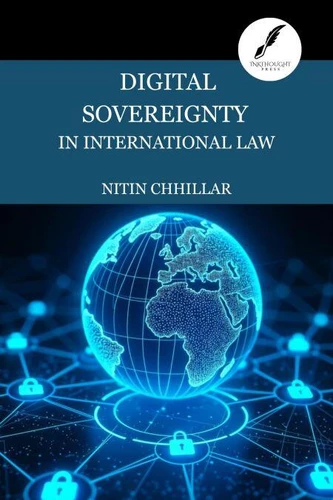
Digital sovereignty in international law
Par :Formats :
Disponible dans votre compte client Decitre ou Furet du Nord dès validation de votre commande. Le format ePub est :
- Compatible avec une lecture sur My Vivlio (smartphone, tablette, ordinateur)
- Compatible avec une lecture sur liseuses Vivlio
- Pour les liseuses autres que Vivlio, vous devez utiliser le logiciel Adobe Digital Edition. Non compatible avec la lecture sur les liseuses Kindle, Remarkable et Sony
 , qui est-ce ?
Notre partenaire de plateforme de lecture numérique où vous retrouverez l'ensemble de vos ebooks gratuitement
Pour en savoir plus sur nos ebooks, consultez notre aide en ligne ici
C'est si simple ! Lisez votre ebook avec l'app Vivlio sur votre tablette, mobile ou ordinateur :

- FormatePub
- ISBN8224164042
- EAN9798224164042
- Date de parution06/02/2026
- Protection num.pas de protection
- Infos supplémentairesepub
- ÉditeurDraft2Digital
Résumé
The accelerating digitization of economic, political, and social life has fundamentally transformed the architecture of global governance and the operation of international law. Traditional conceptions of sovereignty, grounded in territorial control and physical borders, are increasingly strained by cross-border data flows, digital infrastructures, platform governance, cyber operations, and algorithmic decision-making.
In response, the concept of digital sovereignty has emerged as a central yet contested principle shaping contemporary debates in international legal scholarship and practice. This book provides a comprehensive doctrinal and theoretical examination of digital sovereignty as an evolving principle of international law. It traces the historical development of sovereignty, analyzes its reconfiguration in digital environments, and clarifies the legal distinctions between digital sovereignty, cyber sovereignty, and data sovereignty.
Drawing upon international legal theory, the book evaluates competing normative frameworks, liberal, realist, constructivist, and constitutionalist, and situates digital sovereignty within broader debates on authority, legitimacy, and technological power. The book further investigates how norms of digital sovereignty are formed through treaties, customary international law, soft law instruments, United Nations processes, and multi-stakeholder governance mechanisms, while also highlighting the growing influence of private technology corporations as norm entrepreneurs.
It critically explores the interaction between digital sovereignty and international human rights law, focusing on freedom of expression, privacy, data protection, surveillance, extraterritorial obligations, and the risks of digital authoritarianism. Through analysis of geopolitical contestation and regional regulatory divergence, the book demonstrates how digital sovereignty contributes to the fragmentation of international law across trade, security, and human rights regimes.
Comparative case studies of the European Union, United States, China, Russia, and developing states illustrate the legal and ideological diversity shaping the global digital order. The book concludes by assessing future trajectories of digital governance, including institutional reform, global digital compacts, judicial dispute settlement, and the implications of artificial intelligence for sovereignty and state authority. By integrating doctrinal analysis with legal theory and comparative perspectives, this work contributes to contemporary international legal scholarship and offers a rigorous framework for understanding the legal consequences of digital transformation for global order, state power, and fundamental rights.
In response, the concept of digital sovereignty has emerged as a central yet contested principle shaping contemporary debates in international legal scholarship and practice. This book provides a comprehensive doctrinal and theoretical examination of digital sovereignty as an evolving principle of international law. It traces the historical development of sovereignty, analyzes its reconfiguration in digital environments, and clarifies the legal distinctions between digital sovereignty, cyber sovereignty, and data sovereignty.
Drawing upon international legal theory, the book evaluates competing normative frameworks, liberal, realist, constructivist, and constitutionalist, and situates digital sovereignty within broader debates on authority, legitimacy, and technological power. The book further investigates how norms of digital sovereignty are formed through treaties, customary international law, soft law instruments, United Nations processes, and multi-stakeholder governance mechanisms, while also highlighting the growing influence of private technology corporations as norm entrepreneurs.
It critically explores the interaction between digital sovereignty and international human rights law, focusing on freedom of expression, privacy, data protection, surveillance, extraterritorial obligations, and the risks of digital authoritarianism. Through analysis of geopolitical contestation and regional regulatory divergence, the book demonstrates how digital sovereignty contributes to the fragmentation of international law across trade, security, and human rights regimes.
Comparative case studies of the European Union, United States, China, Russia, and developing states illustrate the legal and ideological diversity shaping the global digital order. The book concludes by assessing future trajectories of digital governance, including institutional reform, global digital compacts, judicial dispute settlement, and the implications of artificial intelligence for sovereignty and state authority. By integrating doctrinal analysis with legal theory and comparative perspectives, this work contributes to contemporary international legal scholarship and offers a rigorous framework for understanding the legal consequences of digital transformation for global order, state power, and fundamental rights.