SOLDES
Jusqu'à -70% sur une sélection d'articles*

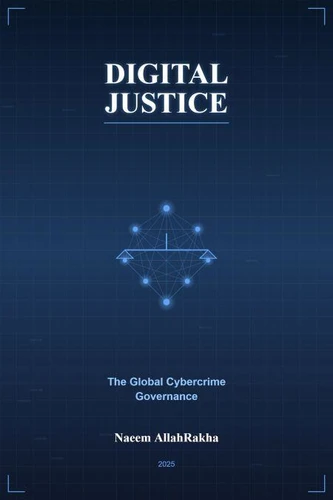
Digital Justice: The Global Cybercrime Governance
Par :Formats :
Disponible dans votre compte client Decitre ou Furet du Nord dès validation de votre commande. Le format ePub est :
- Compatible avec une lecture sur My Vivlio (smartphone, tablette, ordinateur)
- Compatible avec une lecture sur liseuses Vivlio
- Pour les liseuses autres que Vivlio, vous devez utiliser le logiciel Adobe Digital Edition. Non compatible avec la lecture sur les liseuses Kindle, Remarkable et Sony
 , qui est-ce ?
Notre partenaire de plateforme de lecture numérique où vous retrouverez l'ensemble de vos ebooks gratuitement
Pour en savoir plus sur nos ebooks, consultez notre aide en ligne ici
C'est si simple ! Lisez votre ebook avec l'app Vivlio sur votre tablette, mobile ou ordinateur :

- FormatePub
- ISBN8232814328
- EAN9798232814328
- Date de parution08/01/2026
- Protection num.pas de protection
- Infos supplémentairesepub
- ÉditeurDraft2Digital
Résumé
The internet has transformed our world in ways unimaginable just decades ago. We shop online, bank digitally, and share our lives through social media. Children attend virtual classrooms. Doctors consult patients remotely. Businesses operate across continents with a click. Yet this connectivity has a dark side. Criminals now exploit the internet to steal money, spread harmful content, and attack critical infrastructure.
A hacker in one country can empty bank accounts in another within seconds. Child predators share illegal images across borders effortlessly. Ransomware gangs paralyze hospitals and schools, demanding millions in cryptocurrency. Traditional laws struggled to keep pace with these digital threats. Police couldn't chase criminals across borders easily. Evidence stored on foreign servers remained out of reach.
Different countries had different rules about what constituted a crime online. Some nations had strong cybercrime laws while others had none at all. Criminals exploited these gaps, hiding in countries with weak enforcement. The world needed a common approach, a shared language for fighting cybercrime. Without international cooperation, the battle against digital crime seemed hopeless. This challenge gave birth to the Budapest Convention on Cybercrime in 2001.
It became the world's first international treaty specifically designed to combat computer crimes. The Convention created a framework for countries to work together against cyber threats. It defined what cybercrimes are, how to investigate them, and how nations should help each other. More than twenty years later, sixty-six countries have joined this treaty. Over 125 nations have shaped their laws based on its principles.
Every day, police and prosecutors somewhere in the world use this Convention to catch cybercriminals and protect victims. This study explores how this groundbreaking treaty came to be, what it achieved, its limitations, and where it's heading in an age of artificial intelligence and ever-evolving cyber threats.
A hacker in one country can empty bank accounts in another within seconds. Child predators share illegal images across borders effortlessly. Ransomware gangs paralyze hospitals and schools, demanding millions in cryptocurrency. Traditional laws struggled to keep pace with these digital threats. Police couldn't chase criminals across borders easily. Evidence stored on foreign servers remained out of reach.
Different countries had different rules about what constituted a crime online. Some nations had strong cybercrime laws while others had none at all. Criminals exploited these gaps, hiding in countries with weak enforcement. The world needed a common approach, a shared language for fighting cybercrime. Without international cooperation, the battle against digital crime seemed hopeless. This challenge gave birth to the Budapest Convention on Cybercrime in 2001.
It became the world's first international treaty specifically designed to combat computer crimes. The Convention created a framework for countries to work together against cyber threats. It defined what cybercrimes are, how to investigate them, and how nations should help each other. More than twenty years later, sixty-six countries have joined this treaty. Over 125 nations have shaped their laws based on its principles.
Every day, police and prosecutors somewhere in the world use this Convention to catch cybercriminals and protect victims. This study explores how this groundbreaking treaty came to be, what it achieved, its limitations, and where it's heading in an age of artificial intelligence and ever-evolving cyber threats.
A propos de Naeem AllahRakha
29,99 €

Research Methodology
E-book
21,49 €