OFFRE LISEUSES
Une liseuse achetée = une housse offerte* jusqu'au 21 juin

Nouveauté
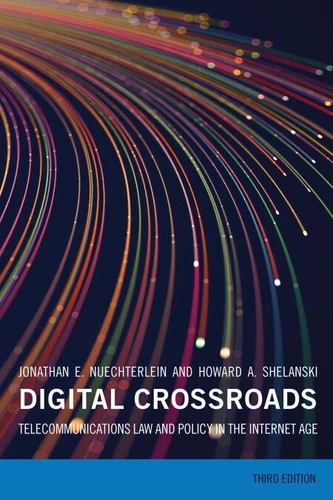
Digital Crossroads. Telecommunications Law and Policy in the Internet Age
Par : ,Formats :
Disponible dans votre compte client Decitre ou Furet du Nord dès validation de votre commande. Le format ePub protégé est :
- Compatible avec une lecture sur My Vivlio (smartphone, tablette, ordinateur)
- Compatible avec une lecture sur liseuses Vivlio
- Pour les liseuses autres que Vivlio, vous devez utiliser le logiciel Adobe Digital Edition. Non compatible avec la lecture sur les liseuses Kindle, Remarkable et Sony
- Non compatible avec un achat hors France métropolitaine
 , qui est-ce ?
Notre partenaire de plateforme de lecture numérique où vous retrouverez l'ensemble de vos ebooks gratuitement
Pour en savoir plus sur nos ebooks, consultez notre aide en ligne ici
C'est si simple ! Lisez votre ebook avec l'app Vivlio sur votre tablette, mobile ou ordinateur :

- Nombre de pages456
- FormatePub
- ISBN978-0-262-05226-9
- EAN9780262052269
- Date de parution12/05/2026
- Protection num.Adobe DRM
- Taille3 Mo
- Infos supplémentairesepub
- ÉditeurThe MIT Press
Résumé
An incisive and thoroughly updated guide to U. S. telecommunications regulation-and what it can teach us about competition policy for Big Tech. In Digital Crossroads, two experts on telecommunications and tech policy offer a comprehensive and accessible analysis of the regulation of competition in the U. S. telecommunications industry. The first two editions of Digital Crossroads (also MIT Press) became essential guides for policymakers, lawyers, scholars, and students in a fast-moving and complex policy field.
In this third edition, the authors have updated the book to include a wide range of industry developments that have reshaped telecommunications policy since the second edition's publication in 2013. These include the rise and fall of common carrier regulation for broadband ISPs, further consolidation within the wireless industry, redoubled efforts to free up more spectrum for commercial uses, the increasing competitive significance of low-Earth-orbiting satellite broadband, and seismic shifts in broadband subsidy initiatives.
The book also includes a new final chapter that explores what the history of telecommunications regulation can teach us about competition policy for today's largest digital platforms. As the authors explain, many proposals for regulating tech markets bear a strong resemblance to the regulatory measures that U. S. policymakers have taken, with varying degrees of success, to promote greater competition within the telecommunications industry over the past 50 years.
The authors conclude that the lessons learned from those regulatory experiments should inform today's competition policy for Big Tech.
In this third edition, the authors have updated the book to include a wide range of industry developments that have reshaped telecommunications policy since the second edition's publication in 2013. These include the rise and fall of common carrier regulation for broadband ISPs, further consolidation within the wireless industry, redoubled efforts to free up more spectrum for commercial uses, the increasing competitive significance of low-Earth-orbiting satellite broadband, and seismic shifts in broadband subsidy initiatives.
The book also includes a new final chapter that explores what the history of telecommunications regulation can teach us about competition policy for today's largest digital platforms. As the authors explain, many proposals for regulating tech markets bear a strong resemblance to the regulatory measures that U. S. policymakers have taken, with varying degrees of success, to promote greater competition within the telecommunications industry over the past 50 years.
The authors conclude that the lessons learned from those regulatory experiments should inform today's competition policy for Big Tech.