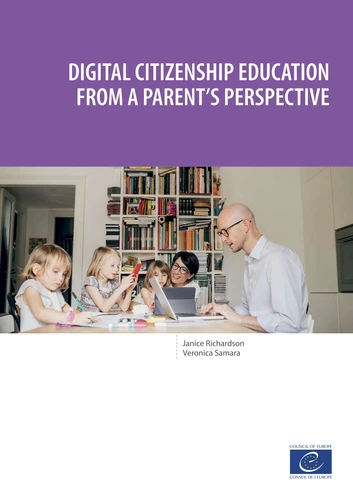
Digital citizenship education from a parent's perspective
Par : ,Formats :
Disponible dans votre compte client Decitre ou Furet du Nord dès validation de votre commande. Le format ePub est :
- Compatible avec une lecture sur My Vivlio (smartphone, tablette, ordinateur)
- Compatible avec une lecture sur liseuses Vivlio
- Pour les liseuses autres que Vivlio, vous devez utiliser le logiciel Adobe Digital Edition. Non compatible avec la lecture sur les liseuses Kindle, Remarkable et Sony
 , qui est-ce ?
Notre partenaire de plateforme de lecture numérique où vous retrouverez l'ensemble de vos ebooks gratuitement
Pour en savoir plus sur nos ebooks, consultez notre aide en ligne ici
C'est si simple ! Lisez votre ebook avec l'app Vivlio sur votre tablette, mobile ou ordinateur :

- FormatePub
- ISBN978-92-871-9417-6
- EAN9789287194176
- Date de parution01/11/2022
- Protection num.pas de protection
- Infos supplémentairesepub
- ÉditeurCouncil of Europe
Résumé
A majority of parents today are grappling with issues such as privacy, digital footprints and bullying. Where do they turn to find reliable information? When should they intervene in their children's online activities? What is their role in ensuring that their children master the values, attitudes, skills and knowledge they need to actively, effectively engage with society?
In 2020, the Council of Europe conducted a survey to better understand the views of parents on digital citizenship education and the concerns they have about their children's use of digital technology.
More than 21 000 parents in 47 countries responded to the survey, which was followed up by interviews in 2020 and 2021. Digital citizenship education from a parent's perspective maps the needs and reflections of parents as they strive to ensure the well-being of their children and help them become competent digital citizens, who are empowered by digital technology rather than shaped by it. Conducted in the midst of school closures during the Covid-19 pandemic, the study documents parents' experience when they stepped up as primary educators, often with little or no guidance from schools and inadequate digital equipment to cover their children's needs.
It aims to foster debate between parents, educators, researchers and policy makers on the meaning and challenges of digital citizenship education for children growing up in today's digital age.
More than 21 000 parents in 47 countries responded to the survey, which was followed up by interviews in 2020 and 2021. Digital citizenship education from a parent's perspective maps the needs and reflections of parents as they strive to ensure the well-being of their children and help them become competent digital citizens, who are empowered by digital technology rather than shaped by it. Conducted in the midst of school closures during the Covid-19 pandemic, the study documents parents' experience when they stepped up as primary educators, often with little or no guidance from schools and inadequate digital equipment to cover their children's needs.
It aims to foster debate between parents, educators, researchers and policy makers on the meaning and challenges of digital citizenship education for children growing up in today's digital age.