
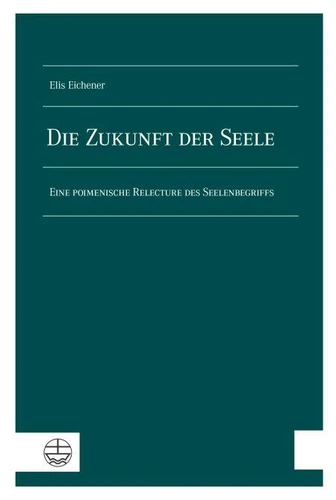
Die Zukunft der Seele. Eine poimenische Relecture des Seelenbegriffs
Par :Formats :
Disponible dans votre compte client Decitre ou Furet du Nord dès validation de votre commande. Le format PDF est :
- Compatible avec une lecture sur My Vivlio (smartphone, tablette, ordinateur)
- Compatible avec une lecture sur liseuses Vivlio
- Pour les liseuses autres que Vivlio, vous devez utiliser le logiciel Adobe Digital Edition. Non compatible avec la lecture sur les liseuses Kindle, Remarkable et Sony
 , qui est-ce ?
Notre partenaire de plateforme de lecture numérique où vous retrouverez l'ensemble de vos ebooks gratuitement
Pour en savoir plus sur nos ebooks, consultez notre aide en ligne ici
C'est si simple ! Lisez votre ebook avec l'app Vivlio sur votre tablette, mobile ou ordinateur :

- Nombre de pages332
- FormatPDF
- ISBN978-3-374-07128-9
- EAN9783374071289
- Date de parution19/04/2022
- Protection num.Digital Watermarking
- Taille2 Mo
- Infos supplémentairespdf
- ÉditeurEvangelische Verlagsanstalt
Résumé
Viele Menschen glauben an die Seele, aber die wissenschaftliche Theologie hat zu ihr ein distanziertes Verhältnis. Stand der Seelenbegriff über Jahrhunderte im Mittelpunkt christlichen Denkens, ist er vor allem im Laufe des 20. Jahrhunderts in die Kritik geraten. Für die Seelsorge, die explizit auf die Seele rekurriert, liegt darin ein Problem. Durch die Skepsis gegenüber der Seelenvorstellung ist nicht nur unklar geworden, was der Gegenstand der Seelsorge ist.
Auch wurde dadurch die theologische Sprachfähigkeit in der Praxis herausgefordert, insbesondere in der Trauerbegleitung. Diese Studie fragt deshalb im interdisziplinären Gespräch danach, wie der Seelenbegriff unter gegenwärtigen geistesgeschichtlichen Bedingungen für die Seelsorge (re-)plausibilisiert werden kann. [The Future of the Soul. A Poimenic Rereading of the Concept of the Soul] Many people believe in the soul, though scientific theology has a distanced relationship towards it.
While the concept of the soul has been at the centre of Christian thought for centuries, it has come under critique especially over the course of the 20th century. This poses a problem for pastoral care, which explicitly refers to the soul. Scepticism about the concept of the soul has not only obscured what the object of pastoral care is, but also challenged the capacity of theological language in practice, especially in grief counselling.
This study thus asks, within an interdisciplinary framework, how the concept of the soul can be made plausible (again) for pastoral care under the contemporary conditions of our intellectual history.
Auch wurde dadurch die theologische Sprachfähigkeit in der Praxis herausgefordert, insbesondere in der Trauerbegleitung. Diese Studie fragt deshalb im interdisziplinären Gespräch danach, wie der Seelenbegriff unter gegenwärtigen geistesgeschichtlichen Bedingungen für die Seelsorge (re-)plausibilisiert werden kann. [The Future of the Soul. A Poimenic Rereading of the Concept of the Soul] Many people believe in the soul, though scientific theology has a distanced relationship towards it.
While the concept of the soul has been at the centre of Christian thought for centuries, it has come under critique especially over the course of the 20th century. This poses a problem for pastoral care, which explicitly refers to the soul. Scepticism about the concept of the soul has not only obscured what the object of pastoral care is, but also challenged the capacity of theological language in practice, especially in grief counselling.
This study thus asks, within an interdisciplinary framework, how the concept of the soul can be made plausible (again) for pastoral care under the contemporary conditions of our intellectual history.