PD Dr. Seraina Plotke ist Hochschuldozentin für Germanistische Mediävistik an der Universität Basel.
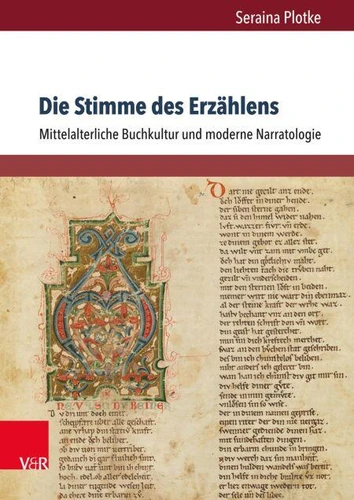
Die Stimme des Erzählens. Mittelalterliche Buchkultur und moderne Narratologie
Par :Formats :
Disponible dans votre compte client Decitre ou Furet du Nord dès validation de votre commande. Le format PDF est :
- Compatible avec une lecture sur My Vivlio (smartphone, tablette, ordinateur)
- Compatible avec une lecture sur liseuses Vivlio
- Pour les liseuses autres que Vivlio, vous devez utiliser le logiciel Adobe Digital Edition. Non compatible avec la lecture sur les liseuses Kindle, Remarkable et Sony
 , qui est-ce ?
Notre partenaire de plateforme de lecture numérique où vous retrouverez l'ensemble de vos ebooks gratuitement
Pour en savoir plus sur nos ebooks, consultez notre aide en ligne ici
C'est si simple ! Lisez votre ebook avec l'app Vivlio sur votre tablette, mobile ou ordinateur :

- Nombre de pages283
- FormatPDF
- ISBN978-3-8470-0592-6
- EAN9783847005926
- Date de parution04/12/2017
- Protection num.pas de protection
- Taille7 Mo
- Infos supplémentairespdf
- ÉditeurV&R Unipress
Résumé
Erzählen ist seinem Ursprung nach ein Phänomen der Mündlichkeit. Die strukturale Narratologie hat ihre Begriffe vornehmlich auf der Basis von Texten gewonnen, denen dieses Entstehungsmerkmal kaum mehr zukommt. Vormodernes Erzählen bewegt sich viel stärker im Spannungsfeld von Oralität und Literalität. Unter dem Aspekt der kodikalen Manuskriptkultur, die volkssprachige Epik häufig ohne paratextuelle Rahmung präsentiert, teilen sich die Instanz des Verfassers und die Rolle des Erzählers die Aufgabe der textvermittelnden literarischen Kommunikation.
Dieser Band richtet seinen Fokus auf mittelalterliche Epik und analysiert vor dem Hintergrund moderner Erzähltheorie, wie Schriftautorität, Autorschaft und die Inszenierung eines als ursprünglich imaginierten Verhältnisses mündlicher Kommunikation zusammenspielen. Narration is from its origin a category of orality. Structuralist narratology has largely developed its models and concepts on the basis of texts with hardly any features remaining from this origin.
Pre-modern narration is much more strongly determined by the tension between orality and literacy. Codex culture often gave a text-internal form to functions of literary communication later realized as paratexts, which raises the question of how close to each other the categories of the author and the narrator figure can be brought. The book focuses on medieval epics and uses contemporary narrative theory to address the interplay of authorship, the authority of writing, and the staging of an originally imaginary relationship of oral communication.
Dieser Band richtet seinen Fokus auf mittelalterliche Epik und analysiert vor dem Hintergrund moderner Erzähltheorie, wie Schriftautorität, Autorschaft und die Inszenierung eines als ursprünglich imaginierten Verhältnisses mündlicher Kommunikation zusammenspielen. Narration is from its origin a category of orality. Structuralist narratology has largely developed its models and concepts on the basis of texts with hardly any features remaining from this origin.
Pre-modern narration is much more strongly determined by the tension between orality and literacy. Codex culture often gave a text-internal form to functions of literary communication later realized as paratexts, which raises the question of how close to each other the categories of the author and the narrator figure can be brought. The book focuses on medieval epics and uses contemporary narrative theory to address the interplay of authorship, the authority of writing, and the staging of an originally imaginary relationship of oral communication.