SOLDES
Jusqu'à -70% sur une sélection d'articles*

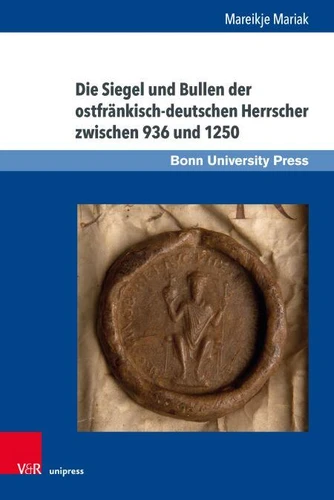
Die Siegel und Bullen der ostfränkisch-deutschen Herrscher zwischen 936 und 1250
Par :Formats :
Disponible dans votre compte client Decitre ou Furet du Nord dès validation de votre commande. Le format PDF est :
- Compatible avec une lecture sur My Vivlio (smartphone, tablette, ordinateur)
- Compatible avec une lecture sur liseuses Vivlio
- Pour les liseuses autres que Vivlio, vous devez utiliser le logiciel Adobe Digital Edition. Non compatible avec la lecture sur les liseuses Kindle, Remarkable et Sony
 , qui est-ce ?
Notre partenaire de plateforme de lecture numérique où vous retrouverez l'ensemble de vos ebooks gratuitement
Pour en savoir plus sur nos ebooks, consultez notre aide en ligne ici
C'est si simple ! Lisez votre ebook avec l'app Vivlio sur votre tablette, mobile ou ordinateur :

- Nombre de pages474
- FormatPDF
- ISBN978-3-8470-1838-4
- EAN9783847018384
- Date de parution16/06/2025
- Protection num.pas de protection
- Taille11 Mo
- Infos supplémentairespdf
- ÉditeurV&R Unipress
Résumé
Die herrscherlichen Siegel und Bullen waren im Mittelalter ein Bildmedium, das in verschiedenen Situationen - wie Dynastiewechseln, Thronstreitsituationen oder dem Mitkönigtum eines Königssohns - strategisch genutzt wurden, um das gewünschte Bild des Herrschers zu präsentieren. Je nach Situation konnte im Bild Kontinuität oder Abgrenzung zum Vorgänger demonstriert werden. Mareikje Mariak untersucht die Entwicklungslinien der Siegelgestaltung für die Zeit von Otto I.
bis zu Friedrich II. im Hinblick auf die dargestellten Attribute, die Formulierung der Umschriften und bezieht auch materielle Aspekte wie Größe und Material der Abdrücke sowie den Wechsel des Siegelstempels und die parallele Verwendung mehrerer Typare mit in die Betrachtung ein. In the Middle Ages royal seals and bulla were used strategically to represent the desired image of the ruler. Depending on the respective political situation - a new dynasty coming to power, two candidates contesting for the throne or a young son being introduced as king during his father's reign - the strategies employed differed, sometimes emphasising continuity, sometimes painting a picture distinctly different from the king's predecessor.
Mareikje Mariak explores the evolution of seal design from the times of Otto I to Frederick II taking into account elements of visual representation as well as inscriptions and aspects of the imprints' materiality. Possible reasons for designing a new seal are also considered, as are situations in which two or more seals were in use at the same time.
bis zu Friedrich II. im Hinblick auf die dargestellten Attribute, die Formulierung der Umschriften und bezieht auch materielle Aspekte wie Größe und Material der Abdrücke sowie den Wechsel des Siegelstempels und die parallele Verwendung mehrerer Typare mit in die Betrachtung ein. In the Middle Ages royal seals and bulla were used strategically to represent the desired image of the ruler. Depending on the respective political situation - a new dynasty coming to power, two candidates contesting for the throne or a young son being introduced as king during his father's reign - the strategies employed differed, sometimes emphasising continuity, sometimes painting a picture distinctly different from the king's predecessor.
Mareikje Mariak explores the evolution of seal design from the times of Otto I to Frederick II taking into account elements of visual representation as well as inscriptions and aspects of the imprints' materiality. Possible reasons for designing a new seal are also considered, as are situations in which two or more seals were in use at the same time.