SOLDES
Jusqu'à -70% sur une sélection d'articles*

Die Autonomie der Routine. Wie im 12. Jahrhundert das englische Schatzamt entstand
Par :Formats :
Disponible dans votre compte client Decitre ou Furet du Nord dès validation de votre commande. Le format PDF est :
- Compatible avec une lecture sur My Vivlio (smartphone, tablette, ordinateur)
- Compatible avec une lecture sur liseuses Vivlio
- Pour les liseuses autres que Vivlio, vous devez utiliser le logiciel Adobe Digital Edition. Non compatible avec la lecture sur les liseuses Kindle, Remarkable et Sony
 , qui est-ce ?
Notre partenaire de plateforme de lecture numérique où vous retrouverez l'ensemble de vos ebooks gratuitement
Pour en savoir plus sur nos ebooks, consultez notre aide en ligne ici
C'est si simple ! Lisez votre ebook avec l'app Vivlio sur votre tablette, mobile ou ordinateur :

- Nombre de pages357
- FormatPDF
- ISBN978-3-647-36723-1
- EAN9783647367231
- Date de parution17/09/2014
- Protection num.pas de protection
- Taille3 Mo
- Infos supplémentairespdf
- ÉditeurVandenhoeck & Ruprecht
Résumé
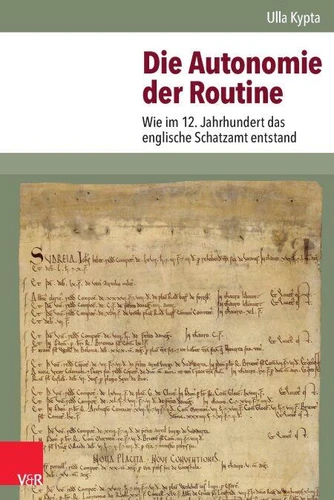
During the 12th century, one of the most durable institutions of the English government emerged: the Exchequer. For seven centuries, it was a corner stone of the royal financial administration. The study explains how the ground was laid for this long-lasting organisation. No one had planned it, not the king nor any outstanding administrative figure. The Exchequer slowly crystallized out of everyday routine actions: The sheriffs came to the royal clerks to render account of all the revenues they had received and all the expenses they had made in the name of the king.
The clerks wrote down everything on large parchment rolls, called the pipe rolls. The clerks and the sheriffs were the only ones to understand the accounting language. They could easily restrict access to their group and thus create a sense of a special identity. Nevertheless, accounting procedures remained flexible enough to cope with new challenges. Slowly, a sense of belonging to the accounting team as well as standardized procedures emerged.
At the end of the century, something new had developed: A certain group of people quite proud of themselves managed the accounting procedures according to certain rules. Without anyone supervising or designing the process, routine actions had themselves transformed into an organisation.
The clerks wrote down everything on large parchment rolls, called the pipe rolls. The clerks and the sheriffs were the only ones to understand the accounting language. They could easily restrict access to their group and thus create a sense of a special identity. Nevertheless, accounting procedures remained flexible enough to cope with new challenges. Slowly, a sense of belonging to the accounting team as well as standardized procedures emerged.
At the end of the century, something new had developed: A certain group of people quite proud of themselves managed the accounting procedures according to certain rules. Without anyone supervising or designing the process, routine actions had themselves transformed into an organisation.