SOLDES
Jusqu'à -70% sur une sélection d'articles*

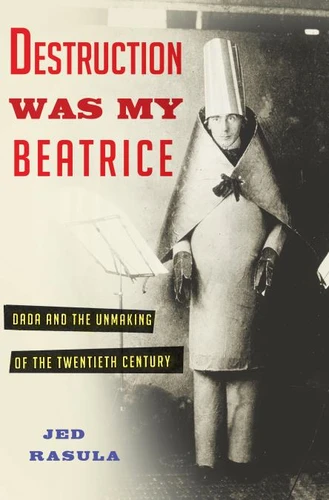
Destruction Was My Beatrice. Dada and the Unmaking of the Twentieth Century
Par :Formats :
Disponible dans votre compte client Decitre ou Furet du Nord dès validation de votre commande. Le format ePub protégé est :
- Compatible avec une lecture sur My Vivlio (smartphone, tablette, ordinateur)
- Compatible avec une lecture sur liseuses Vivlio
- Pour les liseuses autres que Vivlio, vous devez utiliser le logiciel Adobe Digital Edition. Non compatible avec la lecture sur les liseuses Kindle, Remarkable et Sony
- Non compatible avec un achat hors France métropolitaine
 , qui est-ce ?
Notre partenaire de plateforme de lecture numérique où vous retrouverez l'ensemble de vos ebooks gratuitement
Pour en savoir plus sur nos ebooks, consultez notre aide en ligne ici
C'est si simple ! Lisez votre ebook avec l'app Vivlio sur votre tablette, mobile ou ordinateur :

- Nombre de pages384
- FormatePub
- ISBN978-0-465-06694-0
- EAN9780465066940
- Date de parution01/06/2015
- Protection num.Adobe DRM
- Infos supplémentairesepub
- ÉditeurBasic Books
Résumé
In 1916, as World War I raged around them, a group of bohemians gathered at a small nightclub in Zurich, Switzerland for a series of bizarre performances. Three readers simultaneously recited a poem in three languages; a monocle-wearing teenager performed a spell from New Zealand; another young man flung bits of papier-mâché into the air and glued them into place where they landed. One of these artists called the sessions "both buffoonery and a requiem mass." Soon they would be known by a more evocative name: Dada.
In Destruction Was My Beatrice, modernist scholar Jed Rasula presents the first narrative history of the emergence, decline, and legacy of Dada, showing how this strange artistic phenomenon spread across Europe and then the world in the wake of the Great War, fundamentally reshaping modern culture in ways we're still struggling to understand today.
In Destruction Was My Beatrice, modernist scholar Jed Rasula presents the first narrative history of the emergence, decline, and legacy of Dada, showing how this strange artistic phenomenon spread across Europe and then the world in the wake of the Great War, fundamentally reshaping modern culture in ways we're still struggling to understand today.