SOLDES
Jusqu'à -70% sur une sélection d'articles*

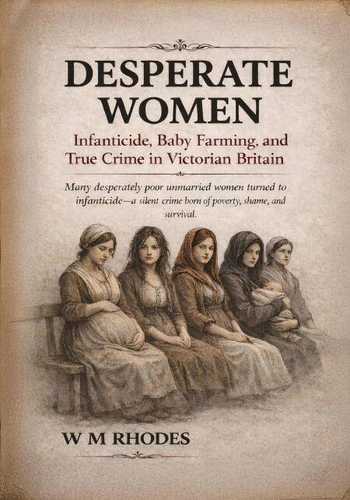
Desperate Women. Desperate Women
Par :Formats :
Disponible dans votre compte client Decitre ou Furet du Nord dès validation de votre commande. Le format ePub est :
- Compatible avec une lecture sur My Vivlio (smartphone, tablette, ordinateur)
- Compatible avec une lecture sur liseuses Vivlio
- Pour les liseuses autres que Vivlio, vous devez utiliser le logiciel Adobe Digital Edition. Non compatible avec la lecture sur les liseuses Kindle, Remarkable et Sony
 , qui est-ce ?
Notre partenaire de plateforme de lecture numérique où vous retrouverez l'ensemble de vos ebooks gratuitement
Pour en savoir plus sur nos ebooks, consultez notre aide en ligne ici
C'est si simple ! Lisez votre ebook avec l'app Vivlio sur votre tablette, mobile ou ordinateur :

- FormatePub
- ISBN978-1-8381769-9-0
- EAN9781838176990
- Date de parution17/03/2026
- Protection num.pas de protection
- Infos supplémentairesepub
- ÉditeurW.M. Rhodes
Résumé
Desperate Women: Infanticide, Baby Farming, and Victorian True Crime in BritainVictorian Britain is often remembered as an age of morality and respectability. Yet behind this image lay a harsher reality for many women. An unmarried pregnancy could mean poverty, abandonment, and social ruin. With no welfare system, limited employment, and little support, some women were driven to desperate acts that shocked society and filled the courtrooms of nineteenth-century Britain.
Drawing on court records, contemporary newspapers, and historical research, Desperate Women examines the hidden history of infanticide and baby farming. Through a series of real cases, W. M. Rhodes explores how social stigma, inequality, and the absence of support shaped the lives of vulnerable women - and the justice system that judged them. This is both a work of historical true crime and a powerful study of Victorian social history, revealing stories that have long been overlooked.
Drawing on court records, contemporary newspapers, and historical research, Desperate Women examines the hidden history of infanticide and baby farming. Through a series of real cases, W. M. Rhodes explores how social stigma, inequality, and the absence of support shaped the lives of vulnerable women - and the justice system that judged them. This is both a work of historical true crime and a powerful study of Victorian social history, revealing stories that have long been overlooked.