
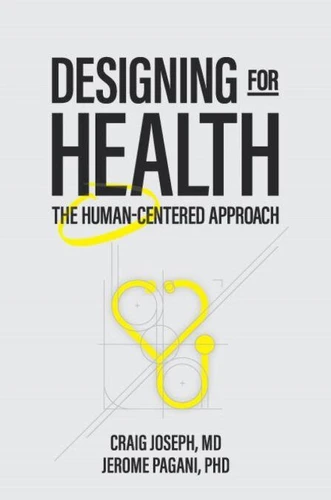
Designing for Health: The Human-Centered Approach
Par : ,Formats :
Disponible dans votre compte client Decitre ou Furet du Nord dès validation de votre commande. Le format ePub protégé est :
- Compatible avec une lecture sur My Vivlio (smartphone, tablette, ordinateur)
- Compatible avec une lecture sur liseuses Vivlio
- Pour les liseuses autres que Vivlio, vous devez utiliser le logiciel Adobe Digital Edition. Non compatible avec la lecture sur les liseuses Kindle, Remarkable et Sony
- Non compatible avec un achat hors France métropolitaine
 , qui est-ce ?
Notre partenaire de plateforme de lecture numérique où vous retrouverez l'ensemble de vos ebooks gratuitement
Pour en savoir plus sur nos ebooks, consultez notre aide en ligne ici
C'est si simple ! Lisez votre ebook avec l'app Vivlio sur votre tablette, mobile ou ordinateur :

- FormatePub
- ISBN978-0-9601205-1-2
- EAN9780960120512
- Date de parution27/10/2023
- Protection num.Adobe DRM
- Infos supplémentairesepub
- ÉditeurOne Louder Productions
Résumé
Want to make healthcare work for the humans who give and receive care? Intentional, human-centered design is the essential (and missing) ingredient. The US healthcare system...well, it could use some help. Some aspects work well-taking care of very sick people with insurance-butother parts are very bad-healthcare access for the poor, equitable outcomes, chronic disease management, and medical bankruptcy.
The system is difficult to use, and people typically only engage when something is wrong with them. Care providers and patientsmostly agree that the healthcare experience is terrible, even when outcomes are good. Clinicians also face a merry-go-round ofneverending paperwork and moral hazards. On top of it all, the broader care ecosystem has emerged by necessity, but was not designedwith the people giving or receiving care in mind. There is no ecosystem-wide solution, but we can build something better from thebottom up.
That journey starts with ahumancentered approach to managing health, preventing disease, and treating illness. Theprinciples in this book are a way ofthinking about designing processes, workflows, operations, and technologies around the person-to-person interaction that is the heart ofhealthcare. They lay the foundation for creating more effective and equitable healthcare, improving experiences, and engaging patients anddoctors in a vision of health as a lifelong endeavor. The time to start is now.
The system is difficult to use, and people typically only engage when something is wrong with them. Care providers and patientsmostly agree that the healthcare experience is terrible, even when outcomes are good. Clinicians also face a merry-go-round ofneverending paperwork and moral hazards. On top of it all, the broader care ecosystem has emerged by necessity, but was not designedwith the people giving or receiving care in mind. There is no ecosystem-wide solution, but we can build something better from thebottom up.
That journey starts with ahumancentered approach to managing health, preventing disease, and treating illness. Theprinciples in this book are a way ofthinking about designing processes, workflows, operations, and technologies around the person-to-person interaction that is the heart ofhealthcare. They lay the foundation for creating more effective and equitable healthcare, improving experiences, and engaging patients anddoctors in a vision of health as a lifelong endeavor. The time to start is now.