
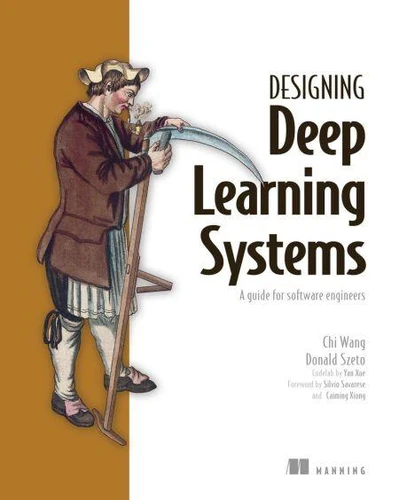
Designing deep learning systems. Software engineering, #1
Par : ,Formats :
Disponible dans votre compte client Decitre ou Furet du Nord dès validation de votre commande. Le format ePub est :
- Compatible avec une lecture sur My Vivlio (smartphone, tablette, ordinateur)
- Compatible avec une lecture sur liseuses Vivlio
- Pour les liseuses autres que Vivlio, vous devez utiliser le logiciel Adobe Digital Edition. Non compatible avec la lecture sur les liseuses Kindle, Remarkable et Sony
 , qui est-ce ?
Notre partenaire de plateforme de lecture numérique où vous retrouverez l'ensemble de vos ebooks gratuitement
Pour en savoir plus sur nos ebooks, consultez notre aide en ligne ici
C'est si simple ! Lisez votre ebook avec l'app Vivlio sur votre tablette, mobile ou ordinateur :

- FormatePub
- ISBN8223355014
- EAN9798223355014
- Date de parution01/09/2023
- Protection num.pas de protection
- Infos supplémentairesepub
- ÉditeurDraft2Digital
Résumé
"Designing deep learning system"is a cuticle resource that addresses the gap in knowledge regarding the efficient bridging of the deep learning research and prototype with production operation. the book is authored by experience deep learning engineering leaders, chi and Donald, who provide valuable insights a guidance for both junior and seasoned engineers.the book begins with an overview of deep learning system, followed by the detailed decisions on each system component.
it highlights the various design choices, they are advantage, and drawbacks, helping reads make informed decision based on their specific use cases. each chapter concludes with an analysis to read assist readers in selecting most suitable options. The authors conclude with a comprehensive discussion on the challenging journey from research and prototyping to production, drawing insights from previous chapters.
To facilitate practical application they offer a sample deep learning system with complete codes examples to illustrate code concepts.
it highlights the various design choices, they are advantage, and drawbacks, helping reads make informed decision based on their specific use cases. each chapter concludes with an analysis to read assist readers in selecting most suitable options. The authors conclude with a comprehensive discussion on the challenging journey from research and prototyping to production, drawing insights from previous chapters.
To facilitate practical application they offer a sample deep learning system with complete codes examples to illustrate code concepts.

