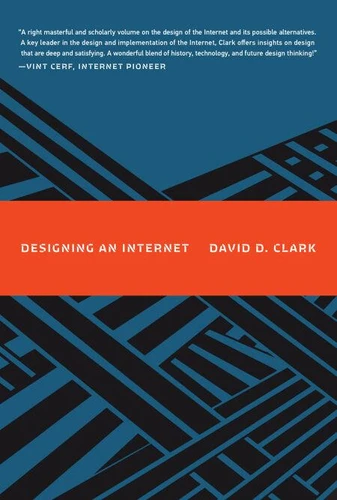
Designing an Internet
Par :Formats :
Disponible dans votre compte client Decitre ou Furet du Nord dès validation de votre commande. Le format ePub protégé est :
- Compatible avec une lecture sur My Vivlio (smartphone, tablette, ordinateur)
- Compatible avec une lecture sur liseuses Vivlio
- Pour les liseuses autres que Vivlio, vous devez utiliser le logiciel Adobe Digital Edition. Non compatible avec la lecture sur les liseuses Kindle, Remarkable et Sony
- Non compatible avec un achat hors France métropolitaine
 , qui est-ce ?
Notre partenaire de plateforme de lecture numérique où vous retrouverez l'ensemble de vos ebooks gratuitement
Pour en savoir plus sur nos ebooks, consultez notre aide en ligne ici
C'est si simple ! Lisez votre ebook avec l'app Vivlio sur votre tablette, mobile ou ordinateur :

- Nombre de pages432
- FormatePub
- ISBN978-0-262-34851-5
- EAN9780262348515
- Date de parution30/10/2018
- Protection num.Adobe DRM
- Taille915 Ko
- Infos supplémentairesepub
- ÉditeurThe MIT Press
Résumé
Why the Internet was designed to be the way it is, and how it could be different, now and in the future. How do you design an internet? The architecture of the current Internet is the product of basic design decisions made early in its history. What would an internet look like if it were designed, today, from the ground up? In this book, MIT computer scientist David Clark explains how the Internet is actually put together, what requirements it was designed to meet, and why different design decisions would create different internets.
He does not take today's Internet as a given but tries to learn from it, and from alternative proposals for what an internet might be, in order to draw some general conclusions about network architecture. Clark discusses the history of the Internet, and how a range of potentially conflicting requirements-including longevity, security, availability, economic viability, management, and meeting the needs of society-shaped its character.
He addresses both the technical aspects of the Internet and its broader social and economic contexts. He describes basic design approaches and explains, in terms accessible to nonspecialists, how networks are designed to carry out their functions. (An appendix offers a more technical discussion of network functions for readers who want the details.) He considers a range of alternative proposals for how to design an internet, examines in detail the key requirements a successful design must meet, and then imagines how to design a future internet from scratch.
It's not that we should expect anyone to do this; but, perhaps, by conceiving a better future, we can push toward it.
He does not take today's Internet as a given but tries to learn from it, and from alternative proposals for what an internet might be, in order to draw some general conclusions about network architecture. Clark discusses the history of the Internet, and how a range of potentially conflicting requirements-including longevity, security, availability, economic viability, management, and meeting the needs of society-shaped its character.
He addresses both the technical aspects of the Internet and its broader social and economic contexts. He describes basic design approaches and explains, in terms accessible to nonspecialists, how networks are designed to carry out their functions. (An appendix offers a more technical discussion of network functions for readers who want the details.) He considers a range of alternative proposals for how to design an internet, examines in detail the key requirements a successful design must meet, and then imagines how to design a future internet from scratch.
It's not that we should expect anyone to do this; but, perhaps, by conceiving a better future, we can push toward it.