
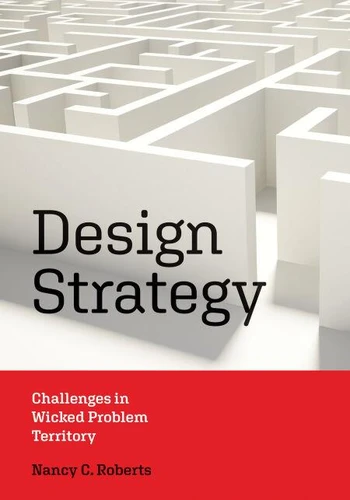
Design Strategy. Challenges in Wicked Problem Territory
Par :Formats :
Disponible dans votre compte client Decitre ou Furet du Nord dès validation de votre commande. Le format ePub protégé est :
- Compatible avec une lecture sur My Vivlio (smartphone, tablette, ordinateur)
- Compatible avec une lecture sur liseuses Vivlio
- Pour les liseuses autres que Vivlio, vous devez utiliser le logiciel Adobe Digital Edition. Non compatible avec la lecture sur les liseuses Kindle, Remarkable et Sony
- Non compatible avec un achat hors France métropolitaine
 , qui est-ce ?
Notre partenaire de plateforme de lecture numérique où vous retrouverez l'ensemble de vos ebooks gratuitement
Pour en savoir plus sur nos ebooks, consultez notre aide en ligne ici
C'est si simple ! Lisez votre ebook avec l'app Vivlio sur votre tablette, mobile ou ordinateur :

- Nombre de pages522
- FormatePub
- ISBN978-0-262-37659-4
- EAN9780262376594
- Date de parution14/11/2023
- Protection num.Adobe DRM
- Taille14 Mo
- Infos supplémentairesepub
- ÉditeurThe MIT Press
Résumé
A new approach to addressing the contemporary world's most difficult challenges, such as climate change and poverty. Conflicts over "the problem" and "the solution" plague the modern world and land problem solvers in what has been called "wicked problem territory"-a social space with high levels of conflict over problems and solutions. In Design Strategy, Nancy C. Roberts proposes design as a strategy of problem solving to close the gap between an existing state and a desired state.
Utilizing this approach, designers and change agents are better able to minimize self-defeating conflicts over problems and solutions, break the logjam of opposition, and avoid the traps that lock problem solvers into a never-ending cycle of conflict. Design as a field continues to grow and evolve, but Design Strategy focuses on three levels of design where "wicked problems" tend to lurk-strategic design (of private and public organizations), systemic design (of networked and overlapping economic, technical, political, and social subsystems), and regenerative design (of life-giving realignment between humanity and nature).
Within this framework, Roberts presents refreshingly interdisciplinary case studies that integrate theory and practice across diverse fields to guide professionals in any domain-from business and nonprofit organizations to educational and healthcare systems-and finally offers hope that humanity can tackle the existential challenges we face in the twenty-first century.
Utilizing this approach, designers and change agents are better able to minimize self-defeating conflicts over problems and solutions, break the logjam of opposition, and avoid the traps that lock problem solvers into a never-ending cycle of conflict. Design as a field continues to grow and evolve, but Design Strategy focuses on three levels of design where "wicked problems" tend to lurk-strategic design (of private and public organizations), systemic design (of networked and overlapping economic, technical, political, and social subsystems), and regenerative design (of life-giving realignment between humanity and nature).
Within this framework, Roberts presents refreshingly interdisciplinary case studies that integrate theory and practice across diverse fields to guide professionals in any domain-from business and nonprofit organizations to educational and healthcare systems-and finally offers hope that humanity can tackle the existential challenges we face in the twenty-first century.