SOLDES
Jusqu'à -70% sur une sélection d'articles*

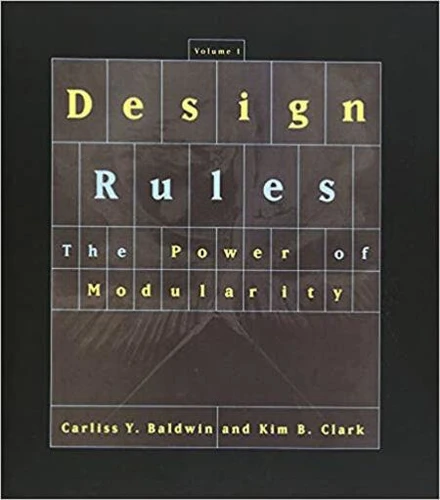
Design Rules, Volume 1. The Power of Modularity
Par : ,Formats :
Disponible dans votre compte client Decitre ou Furet du Nord dès validation de votre commande. Le format ePub protégé est :
- Compatible avec une lecture sur My Vivlio (smartphone, tablette, ordinateur)
- Compatible avec une lecture sur liseuses Vivlio
- Pour les liseuses autres que Vivlio, vous devez utiliser le logiciel Adobe Digital Edition. Non compatible avec la lecture sur les liseuses Kindle, Remarkable et Sony
- Non compatible avec un achat hors France métropolitaine
 , qui est-ce ?
Notre partenaire de plateforme de lecture numérique où vous retrouverez l'ensemble de vos ebooks gratuitement
Pour en savoir plus sur nos ebooks, consultez notre aide en ligne ici
C'est si simple ! Lisez votre ebook avec l'app Vivlio sur votre tablette, mobile ou ordinateur :

- Nombre de pages484
- FormatePub
- ISBN0-262-29185-1
- EAN9780262291859
- Date de parution02/03/2000
- Protection num.Adobe DRM
- Taille4 Mo
- Infos supplémentairesepub
- ÉditeurThe MIT Press
Résumé
We live in a dynamic economic and commerical world, surrounded by objects of remarkable complexity and power. In many industries, changes in products and technologies have brought with them new kinds of firms and forms of organization. We are discovering news ways of structuring work, of bringing buyers and sellers together, and of creating and using market information. Although our fast-moving economy often seems to be outside of our influence or control, human beings create the things that create the market forces.
Devices, software programs, production processes, contracts, firms, and markets are all the fruit of purposeful action: they are designed. Using the computer industry as an example, Carliss Y. Baldwin and Kim B. Clark develop a powerful theory of design and industrial evolution. They argue that the industry has experienced previously unimaginable levels of innovation and growth because it embraced the concept of modularity, building complex products from smaller subsystems that can be designed independently yet function together as a whole.
Modularity freed designers to experiment with different approaches, as long as they obeyed the established design rules. Drawing upon the literatures of industrial organization, real options, and computer architecture, the authors provide insight into the forces of change that drive today's economy.
Devices, software programs, production processes, contracts, firms, and markets are all the fruit of purposeful action: they are designed. Using the computer industry as an example, Carliss Y. Baldwin and Kim B. Clark develop a powerful theory of design and industrial evolution. They argue that the industry has experienced previously unimaginable levels of innovation and growth because it embraced the concept of modularity, building complex products from smaller subsystems that can be designed independently yet function together as a whole.
Modularity freed designers to experiment with different approaches, as long as they obeyed the established design rules. Drawing upon the literatures of industrial organization, real options, and computer architecture, the authors provide insight into the forces of change that drive today's economy.