
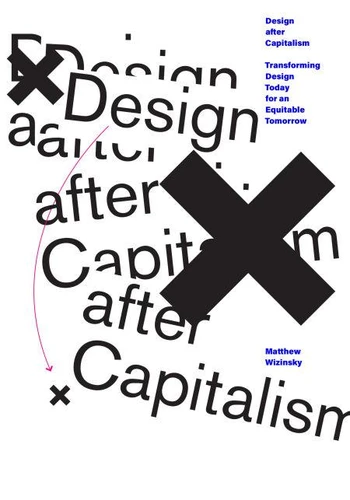
Design after Capitalism /anglais
Par :Formats :
Disponible dans votre compte client Decitre ou Furet du Nord dès validation de votre commande. Le format ePub protégé est :
- Compatible avec une lecture sur My Vivlio (smartphone, tablette, ordinateur)
- Compatible avec une lecture sur liseuses Vivlio
- Pour les liseuses autres que Vivlio, vous devez utiliser le logiciel Adobe Digital Edition. Non compatible avec la lecture sur les liseuses Kindle, Remarkable et Sony
- Non compatible avec un achat hors France métropolitaine
 , qui est-ce ?
Notre partenaire de plateforme de lecture numérique où vous retrouverez l'ensemble de vos ebooks gratuitement
Pour en savoir plus sur nos ebooks, consultez notre aide en ligne ici
C'est si simple ! Lisez votre ebook avec l'app Vivlio sur votre tablette, mobile ou ordinateur :

- Nombre de pages352
- FormatePub
- ISBN978-0-262-36920-6
- EAN9780262369206
- Date de parution15/03/2022
- Protection num.Adobe DRM
- Taille2 Mo
- Infos supplémentairesepub
- ÉditeurThe MIT Press
Résumé
How design can transcend the logics, structures, and subjectivities of capitalism: a framework, theoretical grounding, and practical principles. The designed things, experiences, and symbols that we use to perceive, understand, and perform our everyday lives are much more than just props. They directly shape how we live. In Design after Capitalism, Matthew Wizinsky argues that the world of industrial capitalism that gave birth to modern design has been dramatically transformed.
Design today needs to reorient itself toward deliberate transitions of everyday politics, social relations, and economies. Looking at design through the lens of political economy, Wizinsky calls for the field to transcend the logics, structures, and subjectivities of capitalism-to combine design entrepreneurship with social empowerment in order to facilitate new ways of producing those things, symbols, and experiences that make up everyday life. After analyzing the parallel histories of capitalism and design, Wizinsky offers some historical examples of anticapitalist, noncapitalist, and postcapitalist models of design practice.
These range from the British Arts and Crafts movement of the nineteenth century to contemporary practices of growing furniture or biotextiles and automated forms of production. Drawing on insights from sociology, philosophy, economics, political science, history, environmental and sustainability studies, and critical theory-fields not usually seen as central to design-he lays out core principles for postcapitalist design; offers strategies for applying these principles to the three layers of project, practice, and discipline; and provides a set of practical guidelines for designers to use as a starting point.
The work of postcapitalist design can start today, Wizinsky says-with the next project.
Design today needs to reorient itself toward deliberate transitions of everyday politics, social relations, and economies. Looking at design through the lens of political economy, Wizinsky calls for the field to transcend the logics, structures, and subjectivities of capitalism-to combine design entrepreneurship with social empowerment in order to facilitate new ways of producing those things, symbols, and experiences that make up everyday life. After analyzing the parallel histories of capitalism and design, Wizinsky offers some historical examples of anticapitalist, noncapitalist, and postcapitalist models of design practice.
These range from the British Arts and Crafts movement of the nineteenth century to contemporary practices of growing furniture or biotextiles and automated forms of production. Drawing on insights from sociology, philosophy, economics, political science, history, environmental and sustainability studies, and critical theory-fields not usually seen as central to design-he lays out core principles for postcapitalist design; offers strategies for applying these principles to the three layers of project, practice, and discipline; and provides a set of practical guidelines for designers to use as a starting point.
The work of postcapitalist design can start today, Wizinsky says-with the next project.