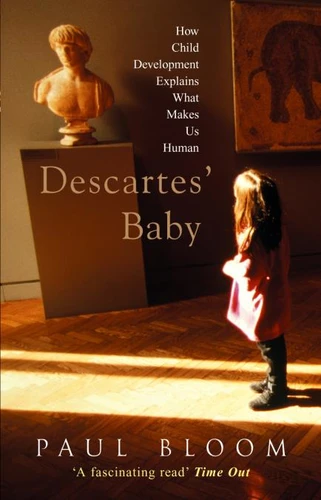
Why is a forgery worth so much less than an original work of art?What's so funny about someone slipping on a banana peel? Why, as Freud once asked, is a man willing to kiss a woman passionately, but not use her toothbrush? And how many times should you baptize a two-headed twin? Descartes' Baby answers such questions, questions we may have never thought to ask about such uniquely human traits as art, humour, faith, disgust, and morality.
In this thought-provoking and fascinating account of human nature, psychologist Paul Bloom contends that we all see the world in terms of bodies and souls. Even babies have a rich understanding of both the physical and social worlds. They expect objects to obey principles of physics, and they're startled when things disappear or defy gravity. They can read the emotions of adults and respond with their own feelings of anger, sympathy and joy.
This perspective remains with us throughout our lives. Using his own researches and new ideas from philosophy, evolutionary biology, aesthetics, theology, and neuroscience, Bloom shows how this way to making sense of reality can explain what makes us human. The myriad ways that our childhood views of the world undergo development throughout our lives and profoundly influences our thoughts, feelings, and actions is the subject of this richly rewarding book.
Why is a forgery worth so much less than an original work of art?What's so funny about someone slipping on a banana peel? Why, as Freud once asked, is a man willing to kiss a woman passionately, but not use her toothbrush? And how many times should you baptize a two-headed twin? Descartes' Baby answers such questions, questions we may have never thought to ask about such uniquely human traits as art, humour, faith, disgust, and morality.
In this thought-provoking and fascinating account of human nature, psychologist Paul Bloom contends that we all see the world in terms of bodies and souls. Even babies have a rich understanding of both the physical and social worlds. They expect objects to obey principles of physics, and they're startled when things disappear or defy gravity. They can read the emotions of adults and respond with their own feelings of anger, sympathy and joy.
This perspective remains with us throughout our lives. Using his own researches and new ideas from philosophy, evolutionary biology, aesthetics, theology, and neuroscience, Bloom shows how this way to making sense of reality can explain what makes us human. The myriad ways that our childhood views of the world undergo development throughout our lives and profoundly influences our thoughts, feelings, and actions is the subject of this richly rewarding book.

 , qui est-ce ?