SOLDES
Jusqu'à -70% sur une sélection d'articles*

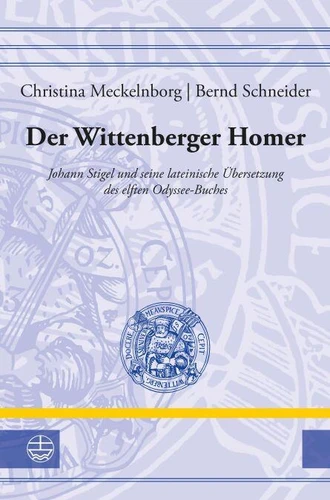
Der Wittenberger Homer. Johann Stigel und seine lateinische Übersetzung des elften Odyssee-Buches
Par : ,Formats :
Disponible dans votre compte client Decitre ou Furet du Nord dès validation de votre commande. Le format ePub est :
- Compatible avec une lecture sur My Vivlio (smartphone, tablette, ordinateur)
- Compatible avec une lecture sur liseuses Vivlio
- Pour les liseuses autres que Vivlio, vous devez utiliser le logiciel Adobe Digital Edition. Non compatible avec la lecture sur les liseuses Kindle, Remarkable et Sony
 , qui est-ce ?
Notre partenaire de plateforme de lecture numérique où vous retrouverez l'ensemble de vos ebooks gratuitement
Pour en savoir plus sur nos ebooks, consultez notre aide en ligne ici
C'est si simple ! Lisez votre ebook avec l'app Vivlio sur votre tablette, mobile ou ordinateur :

- Nombre de pages336
- FormatePub
- ISBN978-3-374-04504-4
- EAN9783374045044
- Date de parution05/06/2016
- Protection num.Digital Watermarking
- Taille3 Mo
- Infos supplémentairesepub
- ÉditeurEvangelische Verlagsanstalt
Résumé
Johann Stigel (1515-1562), der bei Philipp Melanchthon an der Wittenberger Universität studierte und dort 1542 die Terenzprofessur erhielt, war ein zu seiner Zeit gefeierter neulateinischer Dichter, den Kaiser Karl V. 1541 zum poeta laureatus krönte. Unter Stigels zahlreichen Gedichten befindet sich auch eine Übertragung des elften Buches der homerischen Odyssee, die er mit den sprachlichen Mitteln der klassischen römischen Epik gestaltete.
In einem langen Einleitungsgedicht widmete er das Werk dem österreichischen Adligen Ferdinand a Maugis, einem der Tischgenossen Martin Luthers. Darin wird die Vorbildfunktion des Odysseus als vir perfectus für einen in der Öffentlichkeit wirkenden Menschen herausgestellt. Beide Texte werden nach der Wittenberger Erstausgabe von 1545 ediert, mit einer Einleitung versehen, übersetzt und ausführlich kommentiert. [Homer in Wittenberg.
Johann Stigel and His Latin Translation of the Eleventh Odyssee Book] Johann Stigel (1515-1562) studied with Philipp Melanchthon in Wittenberg and received the Terence professorship at the same university in 1542. He was a celebrated Neo-Latin poet of his day and was crowned poet laureate by Emperor Charles V in 1541. Stigel's numerous works include a translation of the eleventh book of Homer's Odyssey, which he cast in the form of a classical Roman epic.
In a long introductory poem, he dedicates the work to Austrian nobleman Ferdinand a Maugis, a table companion of Martin Luther, and develops the figure of Odysseus as vir perfectus and exemplar for a person active in public affairs. The present critical edition of both texts is based on the first Wittenberg edition of 1545 and includes an introduction, translation, and extensive commentary.
In einem langen Einleitungsgedicht widmete er das Werk dem österreichischen Adligen Ferdinand a Maugis, einem der Tischgenossen Martin Luthers. Darin wird die Vorbildfunktion des Odysseus als vir perfectus für einen in der Öffentlichkeit wirkenden Menschen herausgestellt. Beide Texte werden nach der Wittenberger Erstausgabe von 1545 ediert, mit einer Einleitung versehen, übersetzt und ausführlich kommentiert. [Homer in Wittenberg.
Johann Stigel and His Latin Translation of the Eleventh Odyssee Book] Johann Stigel (1515-1562) studied with Philipp Melanchthon in Wittenberg and received the Terence professorship at the same university in 1542. He was a celebrated Neo-Latin poet of his day and was crowned poet laureate by Emperor Charles V in 1541. Stigel's numerous works include a translation of the eleventh book of Homer's Odyssey, which he cast in the form of a classical Roman epic.
In a long introductory poem, he dedicates the work to Austrian nobleman Ferdinand a Maugis, a table companion of Martin Luther, and develops the figure of Odysseus as vir perfectus and exemplar for a person active in public affairs. The present critical edition of both texts is based on the first Wittenberg edition of 1545 and includes an introduction, translation, and extensive commentary.