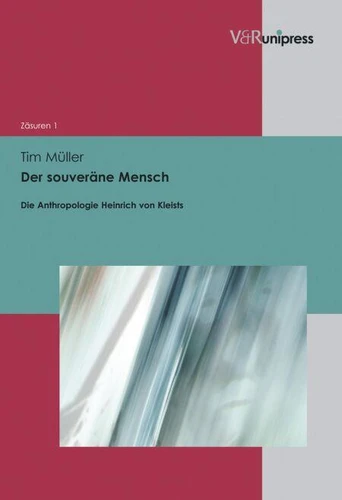
Der souveräne Mensch. Die Anthropologie Heinrich von Kleists
Par : ,Formats :
Disponible dans votre compte client Decitre ou Furet du Nord dès validation de votre commande. Le format PDF est :
- Compatible avec une lecture sur My Vivlio (smartphone, tablette, ordinateur)
- Compatible avec une lecture sur liseuses Vivlio
- Pour les liseuses autres que Vivlio, vous devez utiliser le logiciel Adobe Digital Edition. Non compatible avec la lecture sur les liseuses Kindle, Remarkable et Sony
 , qui est-ce ?
Notre partenaire de plateforme de lecture numérique où vous retrouverez l'ensemble de vos ebooks gratuitement
Pour en savoir plus sur nos ebooks, consultez notre aide en ligne ici
C'est si simple ! Lisez votre ebook avec l'app Vivlio sur votre tablette, mobile ou ordinateur :

- Nombre de pages240
- FormatPDF
- ISBN978-3-86234-876-3
- EAN9783862348763
- Date de parution16/06/2011
- Protection num.pas de protection
- Taille1 Mo
- Infos supplémentairespdf
- ÉditeurV&R Unipress
Résumé
The limitations and possibilities of the human being are central topics in Heinrich von Kleists writings. The tension between the individual and its surrounding ethic and social standards is an essential part of his work. This book will pursue the thesis that the occidental concept of sovereignty can be perceived as a possible key element to Kleists poetic anthropology. In reversing the traditional idea of sovereignty, Kleist is able to create an alternative view of man: individuality beyond social regulations is experienced precisely by means of the individual's personal shortcomings and its non-sovereignty.
For Kleist, humanity's special quality rests in the individual's potential to benefit from its immanent drives, tempers and moods. The result of this emphasis on individuality is the relocation of the power to change back to the human being. Including contemporary concepts of sovereignty, this new and timely approach to Kleists writing is showcased using different case studies.
For Kleist, humanity's special quality rests in the individual's potential to benefit from its immanent drives, tempers and moods. The result of this emphasis on individuality is the relocation of the power to change back to the human being. Including contemporary concepts of sovereignty, this new and timely approach to Kleists writing is showcased using different case studies.