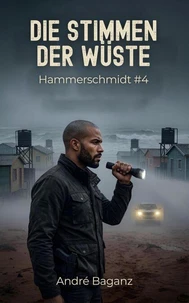



André Baganz (born May 8, 1961, in East Berlin) is a German author whose life and work are closely linked to his experiences as a political prisoner in the German Democratic Republic (GDR, or East Germany). Childhood, Youth, and Attempted EscapeBaganz grew up in Wismar and Streichwitz as the son of a teacher and trained as an automotive mechanic. Due to his skin color-his biological father was Black African-he was, as he later described, exposed to everyday racism in the GDR.
These experiences contributed to his decision to leave the country. In August 1981, Baganz, together with his friend, Andreas A., attempted to flee the GDR by crossing the Inner German Border. The attempt failed: they were arrested for attempted illegal border crossing and taken to the pre-trial detention center in Frankfurt (Oder). Spectacular Breakout and ImprisonmentJust one month later, on the morning of September 20, 1981, André Baganz was involved in one of the most spectacular and violent prison breakouts in GDR history.
Along with three fellow inmates, he planned the forceful escape from the detention facility. The execution of the plan involved a bloody hostage-taking, during which a police officer (Volkspolizist) was killed and a prison guard was shot. The hostage-takers were eventually overpowered by a special unit of the Ministry for State Security (MfS, or Stasi). Baganz was convicted for the collective breakout and hostage-taking and sentenced to life imprisonment.
He served his sentence until the fall of the Wall in the notorious Bautzen II correctional facility. Life After the Wall and Work as an AuthorAfter the end of the GDR, André Baganz was released from prison on May 8, 1991. He settled in the Cologne/Bonn region, where he initially worked in his trained profession and subsequently spent 20 years as a taxi driver in Cologne. Today, Baganz lives in Bonn and works as an author.
He is married and has three daughters and several grandchildren. He processed his experiences of political imprisonment in his book "Der Solist" (The Soloist), which was also published under the titles "Lebenslänglich Bautzen II" (Life Sentence Bautzen II) and "Endstation Bautzen II" (Final Stop Bautzen II). Through his writing, he contributed to the historical examination of the justice and prison conditions in the late GDR.
These experiences contributed to his decision to leave the country. In August 1981, Baganz, together with his friend, Andreas A., attempted to flee the GDR by crossing the Inner German Border. The attempt failed: they were arrested for attempted illegal border crossing and taken to the pre-trial detention center in Frankfurt (Oder). Spectacular Breakout and ImprisonmentJust one month later, on the morning of September 20, 1981, André Baganz was involved in one of the most spectacular and violent prison breakouts in GDR history.
Along with three fellow inmates, he planned the forceful escape from the detention facility. The execution of the plan involved a bloody hostage-taking, during which a police officer (Volkspolizist) was killed and a prison guard was shot. The hostage-takers were eventually overpowered by a special unit of the Ministry for State Security (MfS, or Stasi). Baganz was convicted for the collective breakout and hostage-taking and sentenced to life imprisonment.
He served his sentence until the fall of the Wall in the notorious Bautzen II correctional facility. Life After the Wall and Work as an AuthorAfter the end of the GDR, André Baganz was released from prison on May 8, 1991. He settled in the Cologne/Bonn region, where he initially worked in his trained profession and subsequently spent 20 years as a taxi driver in Cologne. Today, Baganz lives in Bonn and works as an author.
He is married and has three daughters and several grandchildren. He processed his experiences of political imprisonment in his book "Der Solist" (The Soloist), which was also published under the titles "Lebenslänglich Bautzen II" (Life Sentence Bautzen II) and "Endstation Bautzen II" (Final Stop Bautzen II). Through his writing, he contributed to the historical examination of the justice and prison conditions in the late GDR.