SOLDES
Jusqu'à -70% sur une sélection d'articles*

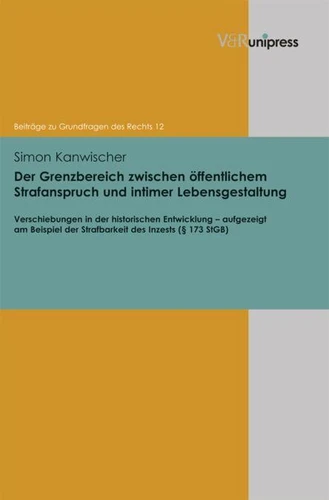
Der Grenzbereich zwischen öffentlichem Strafanspruch und intimer Lebensgestaltung. Verschiebungen in der historischen Entwicklung – aufgezeigt am Beispiel der Strafbarkeit des Inzests (§ 173 StGB)
Par : ,Formats :
Disponible dans votre compte client Decitre ou Furet du Nord dès validation de votre commande. Le format PDF est :
- Compatible avec une lecture sur My Vivlio (smartphone, tablette, ordinateur)
- Compatible avec une lecture sur liseuses Vivlio
- Pour les liseuses autres que Vivlio, vous devez utiliser le logiciel Adobe Digital Edition. Non compatible avec la lecture sur les liseuses Kindle, Remarkable et Sony
 , qui est-ce ?
Notre partenaire de plateforme de lecture numérique où vous retrouverez l'ensemble de vos ebooks gratuitement
Pour en savoir plus sur nos ebooks, consultez notre aide en ligne ici
C'est si simple ! Lisez votre ebook avec l'app Vivlio sur votre tablette, mobile ou ordinateur :

- Nombre de pages194
- FormatPDF
- ISBN978-3-8470-0129-4
- EAN9783847001294
- Date de parution15/05/2013
- Protection num.pas de protection
- Taille1 Mo
- Infos supplémentairespdf
- ÉditeurV&R Unipress
Résumé
This thesis examines the development of the prohibition of incest since the formation of a normative system. It elaborates on the philosophical basis of the legitimacy of penal provisions from the age of Enlightenment and illustrates their practical implementation. A significant part focuses on the development and the perception of the Prussian Criminal Code. Another emphasis is on the social utopias of the late 19th century.
The paper points out the reform approaches of laws governing sexual and moral offenses until 1933, ensuing from the discussion about the matter of legally protected interests. Especially, it takes into account the influences of anthropological criminology and the impacts of the political struggle. Following a discussion on the course of the latest reform efforts, it uses the results of the analysis to examine the jurisdiction of the Federal Constitutional Court critically.
The dissertation concludes with the author's proposal for a reformulation of § 173 StGB.
The paper points out the reform approaches of laws governing sexual and moral offenses until 1933, ensuing from the discussion about the matter of legally protected interests. Especially, it takes into account the influences of anthropological criminology and the impacts of the political struggle. Following a discussion on the course of the latest reform efforts, it uses the results of the analysis to examine the jurisdiction of the Federal Constitutional Court critically.
The dissertation concludes with the author's proposal for a reformulation of § 173 StGB.