SOLDES
Jusqu'à -70% sur une sélection d'articles*

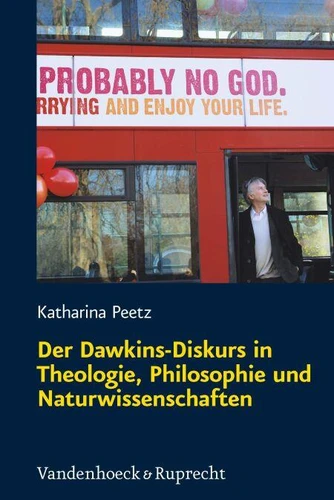
Der Dawkins-Diskurs in Theologie, Philosophie und Naturwissenschaften
Par :Formats :
Disponible dans votre compte client Decitre ou Furet du Nord dès validation de votre commande. Le format PDF est :
- Compatible avec une lecture sur My Vivlio (smartphone, tablette, ordinateur)
- Compatible avec une lecture sur liseuses Vivlio
- Pour les liseuses autres que Vivlio, vous devez utiliser le logiciel Adobe Digital Edition. Non compatible avec la lecture sur les liseuses Kindle, Remarkable et Sony
 , qui est-ce ?
Notre partenaire de plateforme de lecture numérique où vous retrouverez l'ensemble de vos ebooks gratuitement
Pour en savoir plus sur nos ebooks, consultez notre aide en ligne ici
C'est si simple ! Lisez votre ebook avec l'app Vivlio sur votre tablette, mobile ou ordinateur :

- Nombre de pages335
- FormatPDF
- ISBN978-3-647-57026-6
- EAN9783647570266
- Date de parution17/07/2013
- Protection num.pas de protection
- Taille3 Mo
- Infos supplémentairespdf
- ÉditeurVandenhoeck & Ruprecht
Résumé
Richard Dawkins, evolutionary biologist and best-selling author ('The God Delusion') is the most popular religious critic of our time. A well-known slogan of his characterizes religion as the 'root of all evil' and as a justification for 'belief without evidence'. According to Dawkins, the notion of God as a creator is perfectly unnecessary to explain the existence of complex life forms as ourselves.
He advocates instead a gene-centered view of Evolution and Nature in general, where natural selection is the key to the appearance of complex life. Moreover, Dawkins goes beyond his field of activity by rejecting the God hypothesis altogether, even as an explanation for the origin of the Universe. Here is where he receives sharp criticism from theologians, arguing that his reasoning is shallow and unprofessional.
However, an analysis of the Dawkins discourse illustrates that Dawkins' theses deserve to be taken seriously. Among other things, he challenges theologians to argue if the hypothesis of a creator God can be truth-apt in the cognitivistic sense.
He advocates instead a gene-centered view of Evolution and Nature in general, where natural selection is the key to the appearance of complex life. Moreover, Dawkins goes beyond his field of activity by rejecting the God hypothesis altogether, even as an explanation for the origin of the Universe. Here is where he receives sharp criticism from theologians, arguing that his reasoning is shallow and unprofessional.
However, an analysis of the Dawkins discourse illustrates that Dawkins' theses deserve to be taken seriously. Among other things, he challenges theologians to argue if the hypothesis of a creator God can be truth-apt in the cognitivistic sense.
A propos de Katharina Peetz


27,99 €