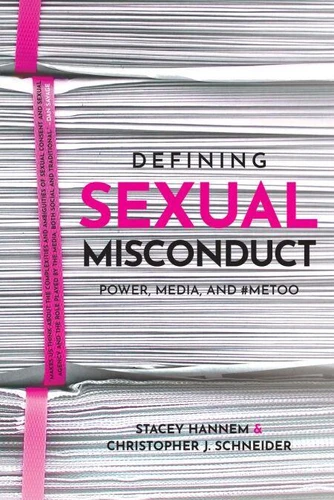
Defining Sexual Misconduct investigates shifts in media coverage of sexual violence and details significant changes in public discourse about sexual harm. In 2015, the New York Times ran just a single headline with the term "sexual misconduct." Three years later, it ran scores of such headlines, averaging more than one per week, and expanded coverage across other media organizations followed. This shift in coverage is reflective of significant changes in public discourse about sexual harm helping to hold some perpetrators accountable for their behaviour and paved the path for #MeToo and related movements against sexual abuse and harm to receive national and global attention.
In Defining Sexual Misconduct, Stacey Hannem and Christopher Schneider trace contemporary shifts in power in relation to the increased recognition and censure of sexual misconduct and the ways in which the shifting social landscape is communicated in the coverage of sexual misconduct in media. Hannem and Schneider also examine the contemporary dynamics of public accusations and their relationship to more formal criminal justice processes, as well as the implications for the stigmatization of alleged abusers and public response to alleged victims.
Since behaviours categorized as sexual misconduct may not all be defined as crimes, or punishable through legal means, social censure and cancel culture often stand as proxy forms of punishment, and the authors reflect on what the pursuit of justice might look like in this extra-legal context.
Defining Sexual Misconduct investigates shifts in media coverage of sexual violence and details significant changes in public discourse about sexual harm. In 2015, the New York Times ran just a single headline with the term "sexual misconduct." Three years later, it ran scores of such headlines, averaging more than one per week, and expanded coverage across other media organizations followed. This shift in coverage is reflective of significant changes in public discourse about sexual harm helping to hold some perpetrators accountable for their behaviour and paved the path for #MeToo and related movements against sexual abuse and harm to receive national and global attention.
In Defining Sexual Misconduct, Stacey Hannem and Christopher Schneider trace contemporary shifts in power in relation to the increased recognition and censure of sexual misconduct and the ways in which the shifting social landscape is communicated in the coverage of sexual misconduct in media. Hannem and Schneider also examine the contemporary dynamics of public accusations and their relationship to more formal criminal justice processes, as well as the implications for the stigmatization of alleged abusers and public response to alleged victims.
Since behaviours categorized as sexual misconduct may not all be defined as crimes, or punishable through legal means, social censure and cancel culture often stand as proxy forms of punishment, and the authors reflect on what the pursuit of justice might look like in this extra-legal context.

 , qui est-ce ?