SOLDES
Jusqu'à -70% sur une sélection d'articles*

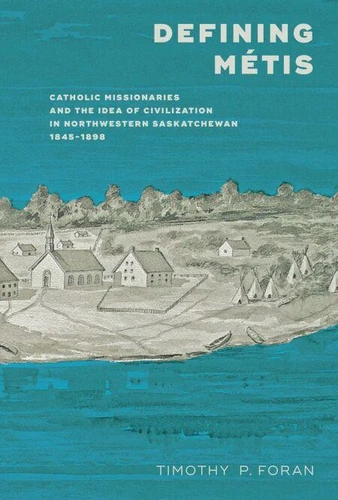
Defining Métis. Catholic Missionaries and the Idea of Civilization in Northwestern Saskatchewan, 1845-1898
Par :Formats :
Disponible dans votre compte client Decitre ou Furet du Nord dès validation de votre commande. Le format ePub est :
- Compatible avec une lecture sur My Vivlio (smartphone, tablette, ordinateur)
- Compatible avec une lecture sur liseuses Vivlio
- Pour les liseuses autres que Vivlio, vous devez utiliser le logiciel Adobe Digital Edition. Non compatible avec la lecture sur les liseuses Kindle, Remarkable et Sony
 , qui est-ce ?
Notre partenaire de plateforme de lecture numérique où vous retrouverez l'ensemble de vos ebooks gratuitement
Pour en savoir plus sur nos ebooks, consultez notre aide en ligne ici
C'est si simple ! Lisez votre ebook avec l'app Vivlio sur votre tablette, mobile ou ordinateur :

- Nombre de pages241
- FormatePub
- ISBN978-0-88755-511-4
- EAN9780887555114
- Date de parution10/05/2017
- Protection num.Digital Watermarking
- Taille3 Mo
- Infos supplémentairesepub
- ÉditeurUniversity of Manitoba Press
Résumé
Defining Métis examines categories used in the latter half of the nineteenth century by Catholic missionaries to describe Indigenous people in what is now northwestern Saskatchewan. It argues that the construction and evolution of these categories reflected missionaries'changing interests and agendas.
Defining Métis sheds light on the earliest phases of Catholic missionary work among Indigenous peoples in western and northern Canada.
It examines various interrelated aspects of this work, including the beginnings of residential schooling, transportation and communications, and relations between the Church, the Hudson's Bay Company, and the federal government. While focusing on the Oblates of Mary Immaculate and their central mission at Île-à-la-Crosse, this study illuminates broad processes that informed Catholic missionary perceptions and impelled their evolution over a fifty-three-year period.
In particular, this study illuminates processes that shaped Oblate conceptions of sauvage and métis. It does this through a qualitative analysis of documents that were produced within the Oblates' institutional apparatus-official correspondence, mission journals, registers, and published reports. Foran challenges the orthodox notion that Oblate commentators simply discovered and described a singular, empirically existing, and readily identifiable Métis population.
Rather, he contends that Oblates played an important role in the conceptual production of les métis.
It examines various interrelated aspects of this work, including the beginnings of residential schooling, transportation and communications, and relations between the Church, the Hudson's Bay Company, and the federal government. While focusing on the Oblates of Mary Immaculate and their central mission at Île-à-la-Crosse, this study illuminates broad processes that informed Catholic missionary perceptions and impelled their evolution over a fifty-three-year period.
In particular, this study illuminates processes that shaped Oblate conceptions of sauvage and métis. It does this through a qualitative analysis of documents that were produced within the Oblates' institutional apparatus-official correspondence, mission journals, registers, and published reports. Foran challenges the orthodox notion that Oblate commentators simply discovered and described a singular, empirically existing, and readily identifiable Métis population.
Rather, he contends that Oblates played an important role in the conceptual production of les métis.