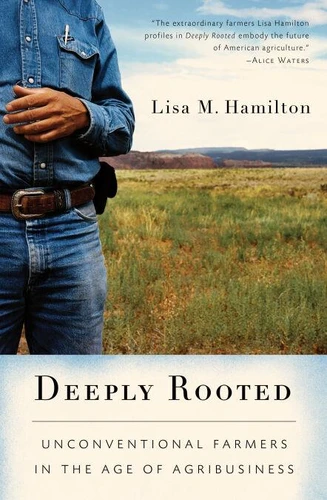
Deeply Rooted. Unconventional Farmers in the Age of Agribusiness
Par :Formats :
Disponible dans votre compte client Decitre ou Furet du Nord dès validation de votre commande. Le format ePub protégé est :
- Compatible avec une lecture sur My Vivlio (smartphone, tablette, ordinateur)
- Compatible avec une lecture sur liseuses Vivlio
- Pour les liseuses autres que Vivlio, vous devez utiliser le logiciel Adobe Digital Edition. Non compatible avec la lecture sur les liseuses Kindle, Remarkable et Sony
- Non compatible avec un achat hors France métropolitaine
 , qui est-ce ?
Notre partenaire de plateforme de lecture numérique où vous retrouverez l'ensemble de vos ebooks gratuitement
Pour en savoir plus sur nos ebooks, consultez notre aide en ligne ici
C'est si simple ! Lisez votre ebook avec l'app Vivlio sur votre tablette, mobile ou ordinateur :

- Nombre de pages304
- FormatePub
- ISBN978-1-58243-925-9
- EAN9781582439259
- Date de parution25/03/2009
- Protection num.Adobe DRM
- Taille772 Ko
- Infos supplémentairesepub
- ÉditeurCounterpoint
Résumé
A century of industrialization has left our food system riddled with problems, yet for solutions we look to nutritionists and government agencies, scientists and chefs. Lisa M. Hamilton asks: Why not look to the people who grow our food?Hamilton makes this vital inquiry through the stories of three unconventional farmers: an African-American dairyman in Texas who plays David to the Goliath of agribusiness corporations; a tenth-generation rancher in New Mexico struggling to restore agriculture as a pillar of his crumbling community; and a modern pioneer family in North Dakota who is breeding new varieties of plants to face the future's double threat: Monsanto and global warming.
Threads of history and discussion weave through the tales, exploring how farmers have been pushed to the margins of agriculture and transformed from leaders to laborers. These unusual characters and their surprising stories make the case that in order to correct what has gone wrong with the food system, we must first bring farmers back to the table.
Threads of history and discussion weave through the tales, exploring how farmers have been pushed to the margins of agriculture and transformed from leaders to laborers. These unusual characters and their surprising stories make the case that in order to correct what has gone wrong with the food system, we must first bring farmers back to the table.