SOLDES
Jusqu'à -70% sur une sélection d'articles*

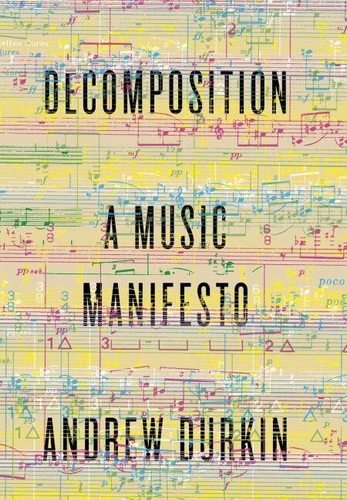
Decomposition. A Music Manifesto
Par :Formats :
Disponible dans votre compte client Decitre ou Furet du Nord dès validation de votre commande. Le format ePub protégé est :
- Compatible avec une lecture sur My Vivlio (smartphone, tablette, ordinateur)
- Compatible avec une lecture sur liseuses Vivlio
- Pour les liseuses autres que Vivlio, vous devez utiliser le logiciel Adobe Digital Edition. Non compatible avec la lecture sur les liseuses Kindle, Remarkable et Sony
- Non compatible avec un achat hors France métropolitaine
 , qui est-ce ?
Notre partenaire de plateforme de lecture numérique où vous retrouverez l'ensemble de vos ebooks gratuitement
Pour en savoir plus sur nos ebooks, consultez notre aide en ligne ici
C'est si simple ! Lisez votre ebook avec l'app Vivlio sur votre tablette, mobile ou ordinateur :

- Nombre de pages400
- FormatePub
- ISBN978-0-307-91176-6
- EAN9780307911766
- Date de parution18/11/2014
- Protection num.Adobe DRM
- Taille5 Mo
- Infos supplémentairesepub
- ÉditeurPantheon
Résumé
Decomposition is a bracing, revisionary, and provocative inquiry into music-from Beethoven to Duke Ellington, from Conlon Nancarrow to Evelyn Glennie-as a personal and cultural experience: how it is composed, how it is idiosyncratically perceived by critics and reviewers, and why we listen to it the way we do. Andrew Durkin, best known as the leader of the West Coast-based Industrial Jazz Group, is singular for his insistence on asking tough questions about the complexity of our presumptions about music and about listening, especially in the digital age.
In this winning and lucid study he explodes the age-old concept of musical composition as the work of individual genius, arguing instead that in both its composition and reception music is fundamentally a collaborative enterprise that comes into being only through mediation. Drawing on a rich variety of examples-Big Jay McNeely's "Deacon's Hop, " Biz Markie's "Alone Again, " George Antheil's Ballet Mécanique, Frank Zappa's "While You Were Art, " and Pauline Oliveros's "Tuning Meditation, " to name only a few-Durkin makes clear that our appreciation of any piece of music is always informed by neuroscientific, psychological, technological, and cultural factors.
How we listen to music, he maintains, might have as much power to change it as music might have to change how we listen.
In this winning and lucid study he explodes the age-old concept of musical composition as the work of individual genius, arguing instead that in both its composition and reception music is fundamentally a collaborative enterprise that comes into being only through mediation. Drawing on a rich variety of examples-Big Jay McNeely's "Deacon's Hop, " Biz Markie's "Alone Again, " George Antheil's Ballet Mécanique, Frank Zappa's "While You Were Art, " and Pauline Oliveros's "Tuning Meditation, " to name only a few-Durkin makes clear that our appreciation of any piece of music is always informed by neuroscientific, psychological, technological, and cultural factors.
How we listen to music, he maintains, might have as much power to change it as music might have to change how we listen.