
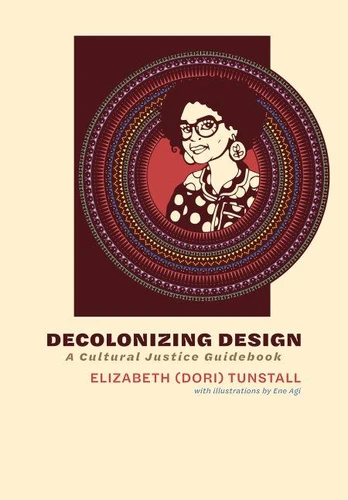
Decolonizing Design. A Cultural Justice Guidebook
Par : ,Formats :
Disponible dans votre compte client Decitre ou Furet du Nord dès validation de votre commande. Le format ePub protégé est :
- Compatible avec une lecture sur My Vivlio (smartphone, tablette, ordinateur)
- Compatible avec une lecture sur liseuses Vivlio
- Pour les liseuses autres que Vivlio, vous devez utiliser le logiciel Adobe Digital Edition. Non compatible avec la lecture sur les liseuses Kindle, Remarkable et Sony
- Non compatible avec un achat hors France métropolitaine
 , qui est-ce ?
Notre partenaire de plateforme de lecture numérique où vous retrouverez l'ensemble de vos ebooks gratuitement
Pour en savoir plus sur nos ebooks, consultez notre aide en ligne ici
C'est si simple ! Lisez votre ebook avec l'app Vivlio sur votre tablette, mobile ou ordinateur :

- Nombre de pages136
- FormatePub
- ISBN978-0-262-37313-5
- EAN9780262373135
- Date de parution14/02/2023
- Protection num.Adobe DRM
- Taille3 Mo
- Infos supplémentairesepub
- ÉditeurThe MIT Press
Résumé
A guidebook to the institutional transformation of design theory and practice by restoring the long-excluded cultures of Indigenous, Black, and People of Color communities. From the excesses of world expositions to myths of better living through technology, modernist design, in its European-based guises, has excluded and oppressed the very people whose lands and lives it reshaped. Decolonizing Design first asks how modernist design has encompassed and advanced the harmful project of colonization-then shows how design might address these harms by recentering its theory and practice in global Indigenous cultures and histories.
A leading figure in the movement to decolonize design, Dori Tunstall uses hard-hitting real-life examples and case studies drawn from over fifteen years of working to transform institutions to better reflect the lived experiences of Indigenous, Black, and People of Color communities. Her book is at once enlightening, inspiring, and practical, interweaving her lived experiences with extensive research to show what decolonizing design means, how it heals, and how to practice it in our institutions today.
For leaders and practitioners in design institutions and communities, Tunstall's work demonstrates how we can transform the way we imagine and remake the world, replacing pain and repression with equity, inclusion, and diversity-in short, she shows us how to realize the infinite possibilities that decolonized design represents.
A leading figure in the movement to decolonize design, Dori Tunstall uses hard-hitting real-life examples and case studies drawn from over fifteen years of working to transform institutions to better reflect the lived experiences of Indigenous, Black, and People of Color communities. Her book is at once enlightening, inspiring, and practical, interweaving her lived experiences with extensive research to show what decolonizing design means, how it heals, and how to practice it in our institutions today.
For leaders and practitioners in design institutions and communities, Tunstall's work demonstrates how we can transform the way we imagine and remake the world, replacing pain and repression with equity, inclusion, and diversity-in short, she shows us how to realize the infinite possibilities that decolonized design represents.