
L'Union européenne est à la croisée des chemins : entre implosion et refondation. Il s'agit, dans ce numéro de Cités, de revenir sur ses principes constitutif pour déterminer à quelle conditions elle peut retrouver la perspective d'un avenir, qui ne peut aller sans le soutien des peuples et des citoyens européens.
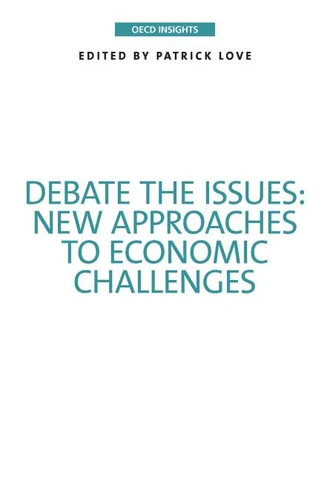
Debate the Issues: New Approaches to Economic Challenges
Par :Formats :
Disponible dans votre compte client Decitre ou Furet du Nord dès validation de votre commande. Le format Multi-format est :
- Pour les liseuses autres que Vivlio, vous devez utiliser le logiciel Adobe Digital Edition. Non compatible avec la lecture sur les liseuses Kindle, Remarkable et Sony
 , qui est-ce ?
Notre partenaire de plateforme de lecture numérique où vous retrouverez l'ensemble de vos ebooks gratuitement
Pour en savoir plus sur nos ebooks, consultez notre aide en ligne ici
C'est si simple ! Lisez votre ebook avec l'app Vivlio sur votre tablette, mobile ou ordinateur :

- Nombre de pages168
- FormatMulti-format
- ISBN978-92-64-26470-0
- EAN9789264264700
- Date de parution21/09/2016
- Protection num.pas de protection
- Infos supplémentairesMulti-Format
- ÉditeurOECD
Résumé
To capitalise on the new international resolve epitomised by COP21 and the agreement on the universal Sustainable Development Goals (SDGs) requires a renewed effort to promote new policy thinking and new approaches to the great challenges ahead. Responding to new challenges means we have to adopt more ambitious frameworks, design more effective tools, and propose more precise policies that will take account of the complex and multidimensional nature of the challenges.
The goal is to develop a better sense of how economies really work and to articulate strategies which reflect this understanding. The OECD's New Approaches to Economic Challenges (NAEC) exercise challenges our assumptions and our understanding about the workings of the economy. This collection from OECD Insights summarises opinions from inside and outside the Organisation on how NAEC can contribute to achieving the SDGs, and describes how the OECD is placing its statistical, monitoring and analytical capacities at the service of the international community.
The authors also consider the transformation of the world economy that will be needed and the long-term "tectonic shifts" that are affecting people, the planet, global productivity, and institutions.
The goal is to develop a better sense of how economies really work and to articulate strategies which reflect this understanding. The OECD's New Approaches to Economic Challenges (NAEC) exercise challenges our assumptions and our understanding about the workings of the economy. This collection from OECD Insights summarises opinions from inside and outside the Organisation on how NAEC can contribute to achieving the SDGs, and describes how the OECD is placing its statistical, monitoring and analytical capacities at the service of the international community.
The authors also consider the transformation of the world economy that will be needed and the long-term "tectonic shifts" that are affecting people, the planet, global productivity, and institutions.
A propos de Collectif

6,00 €

24,99 €

Maths CE1. Mon fichier
Edition 2023
Grand Format
7,90 €
9,20 €

5,90 €

Vivre les maths CE1. Fichiers 1 et 2
Grand Format
12,90 €

15,50 €

6,95 €

Maths CE1. Mon cahier de problèmes
Edition 2023
Edition 2023
Grand Format
3,30 €



6,50 €

Ophtalmologie
6e édition
6e édition
Grand Format
37,90 €

9,50 €

Best of Pixar
Album
15,95 €



9,50 €