
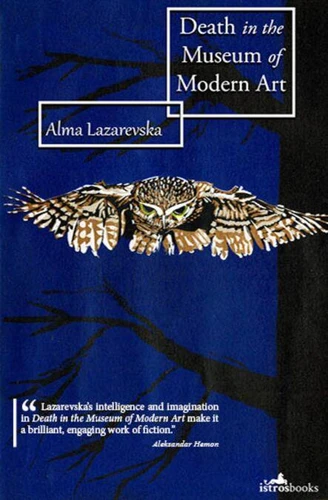
Death in the Museum of Modern Art
Par :Formats :
Disponible dans votre compte client Decitre ou Furet du Nord dès validation de votre commande. Le format ePub protégé est :
- Compatible avec une lecture sur My Vivlio (smartphone, tablette, ordinateur)
- Compatible avec une lecture sur liseuses Vivlio
- Pour les liseuses autres que Vivlio, vous devez utiliser le logiciel Adobe Digital Edition. Non compatible avec la lecture sur les liseuses Kindle, Remarkable et Sony
- Non compatible avec un achat hors France métropolitaine
 , qui est-ce ?
Notre partenaire de plateforme de lecture numérique où vous retrouverez l'ensemble de vos ebooks gratuitement
Pour en savoir plus sur nos ebooks, consultez notre aide en ligne ici
C'est si simple ! Lisez votre ebook avec l'app Vivlio sur votre tablette, mobile ou ordinateur :

- Nombre de pages124
- FormatePub
- ISBN978-1-908236-46-3
- EAN9781908236463
- Date de parution17/11/2014
- Protection num.Adobe DRM
- Taille3 Mo
- Infos supplémentairesepub
- ÉditeurIstros Books
Résumé
Very different from the rougher, blunter prose of her male contemporaries, Alma Lazarevska's stories can perhaps be described as the tender heart of Bosnian war. Writing from the domestic perspective, her prose is nevertheless deceptively simple; allowing the horror of the war to impinge with devastating effect on the most banal, everyday scene. Apart from the protagonist of the first story, the characters remain nameless.
In five of the six stories we can assume that we are following the same unnamed female narrator, who refers to her husband simply as "He" and her son as simply "The Boy." In a conflict where ethnic identity is at the heart, it seems a sobering decision to dispense with names. The family in these stories are at the same time everyone and no-one. They might become bigger than themselves, standing for every group that has ever been the victim of violence due to their ethnicity; or they might represent the de-humanization that has to occur in order for such persecutions to be carried out, reduced to pronouns rather than individuals with names.
"Him" and "her" seem perilously close to "it." This collection brings home the acute unfairness of forcing that contemplation of death upon another person, of depriving them of that human freedom to dream and delude themselves. And it is a beautiful acknowledgement of the small humanities that we cling to when we are at the mercy of so much inhumanity.
In five of the six stories we can assume that we are following the same unnamed female narrator, who refers to her husband simply as "He" and her son as simply "The Boy." In a conflict where ethnic identity is at the heart, it seems a sobering decision to dispense with names. The family in these stories are at the same time everyone and no-one. They might become bigger than themselves, standing for every group that has ever been the victim of violence due to their ethnicity; or they might represent the de-humanization that has to occur in order for such persecutions to be carried out, reduced to pronouns rather than individuals with names.
"Him" and "her" seem perilously close to "it." This collection brings home the acute unfairness of forcing that contemplation of death upon another person, of depriving them of that human freedom to dream and delude themselves. And it is a beautiful acknowledgement of the small humanities that we cling to when we are at the mercy of so much inhumanity.