SOLDES
Jusqu'à -70% sur une sélection d'articles*

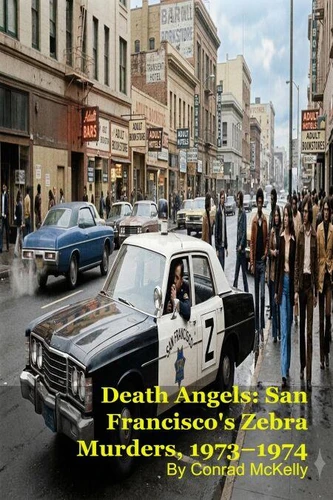
Death Angels: San Francisco's Zebra Murders, 1973–1974
Par :Formats :
Disponible dans votre compte client Decitre ou Furet du Nord dès validation de votre commande. Le format ePub est :
- Compatible avec une lecture sur My Vivlio (smartphone, tablette, ordinateur)
- Compatible avec une lecture sur liseuses Vivlio
- Pour les liseuses autres que Vivlio, vous devez utiliser le logiciel Adobe Digital Edition. Non compatible avec la lecture sur les liseuses Kindle, Remarkable et Sony
 , qui est-ce ?
Notre partenaire de plateforme de lecture numérique où vous retrouverez l'ensemble de vos ebooks gratuitement
Pour en savoir plus sur nos ebooks, consultez notre aide en ligne ici
C'est si simple ! Lisez votre ebook avec l'app Vivlio sur votre tablette, mobile ou ordinateur :

- FormatePub
- ISBN8224713929
- EAN9798224713929
- Date de parution07/03/2026
- Protection num.pas de protection
- Infos supplémentairesepub
- ÉditeurDraft2Digital
Résumé
Death Angels: San Francisco's Zebra Murders, 1973-1974In the autumn of 1973, a city that prided itself on tolerance and progressive idealism became the hunting ground for one of the most organized and ideologically driven murder campaigns in American history. Over one hundred and seventy-nine days, a cell of radicalized men calling themselves Death Angels - operating out of a moving company on Market Street and drawing their theological warrant from a distorted interpretation of Nation of Islam doctrine - killed at least fifteen people and wounded eight others on the streets of San Francisco.
Their victims were chosen for one reason only: the color of their skin. Death Angels tells the full story of the Zebra murders - the terror, the investigation, the constitutional crisis of Operation Zebra's mass racial profiling, and the year-long trial that sent four men to prison for life. Drawing on the trial record of People v. Cooks, the memoir of the investigation's lead detective Prentice Earl Sanders, and Clark Howard's foundational account, Conrad McKelly reconstructs not only the crimes but the city they nearly broke: its empty streets, its fractured institutions, its slow and incomplete recovery.
This is narrative history at its most urgent - a case that anticipated every debate about domestic terrorism, racial profiling, and civil liberties that America is still having today.
Their victims were chosen for one reason only: the color of their skin. Death Angels tells the full story of the Zebra murders - the terror, the investigation, the constitutional crisis of Operation Zebra's mass racial profiling, and the year-long trial that sent four men to prison for life. Drawing on the trial record of People v. Cooks, the memoir of the investigation's lead detective Prentice Earl Sanders, and Clark Howard's foundational account, Conrad McKelly reconstructs not only the crimes but the city they nearly broke: its empty streets, its fractured institutions, its slow and incomplete recovery.
This is narrative history at its most urgent - a case that anticipated every debate about domestic terrorism, racial profiling, and civil liberties that America is still having today.