
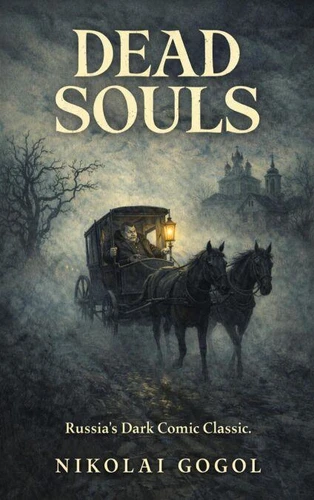
Dead Souls
Par :Formats :
Disponible dans votre compte client Decitre ou Furet du Nord dès validation de votre commande. Le format ePub est :
- Compatible avec une lecture sur My Vivlio (smartphone, tablette, ordinateur)
- Compatible avec une lecture sur liseuses Vivlio
- Pour les liseuses autres que Vivlio, vous devez utiliser le logiciel Adobe Digital Edition. Non compatible avec la lecture sur les liseuses Kindle, Remarkable et Sony
 , qui est-ce ?
Notre partenaire de plateforme de lecture numérique où vous retrouverez l'ensemble de vos ebooks gratuitement
Pour en savoir plus sur nos ebooks, consultez notre aide en ligne ici
C'est si simple ! Lisez votre ebook avec l'app Vivlio sur votre tablette, mobile ou ordinateur :

- Nombre de pages421
- FormatePub
- ISBN978-625-387-481-0
- EAN9786253874810
- Date de parution05/03/2026
- Protection num.Digital Watermarking
- Taille4 Mo
- Infos supplémentairesepub
- ÉditeurE-Kitap Projesi & Cheapest Boo
Résumé
Dead Souls, is a novel by Nikolai Gogol, first published in 1842, and widely regarded as an exemplar of 19th-century Russian literature. The purpose of the novel was to demonstrate the flaws and faults of the Russian mentality and character. Gogol masterfully portrayed those defects through Pavel Ivanovich Chichikov (the main character) and the people whom he encounters in his endeavours.
These people are typical of the Russian middle-class of the time.
Gogol himself saw it as an "epic poem in prose", and within the book as a "novel in verse". Despite supposedly completing the trilogy's second part, Gogol destroyed it shortly before his death. Although the novel ends in mid-sentence (like Sterne's Sentimental Journey) "To the door of an inn in the provincial town of N. there drew up a smart britchka-a light spring-carriage of the sort affected by bachelors, retired lieutenant-colonels, staff-captains, land-owners possessed of about a hundred souls, and, in short, all persons who rank as gentlemen of the intermediate category.
Gogol himself saw it as an "epic poem in prose", and within the book as a "novel in verse". Despite supposedly completing the trilogy's second part, Gogol destroyed it shortly before his death. Although the novel ends in mid-sentence (like Sterne's Sentimental Journey) "To the door of an inn in the provincial town of N. there drew up a smart britchka-a light spring-carriage of the sort affected by bachelors, retired lieutenant-colonels, staff-captains, land-owners possessed of about a hundred souls, and, in short, all persons who rank as gentlemen of the intermediate category.
A propos de Nikolai Gogol

4,99 €

0,99 €
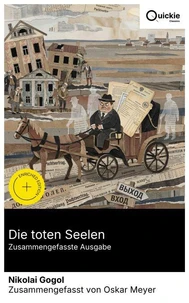
Die toten Seelen
E-book
0,49 €
Thomas Seltzer
E-book
0,49 €
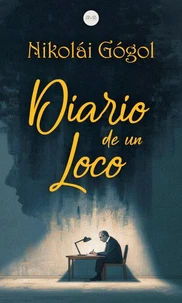
Diario de un Loco
E-book
3,99 €
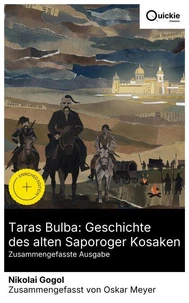
Taras Bulba
E-book
0,49 €
The Nose
E-book
0,49 €
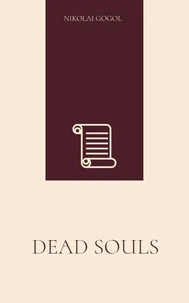
Dead Souls
E-book
0,49 €
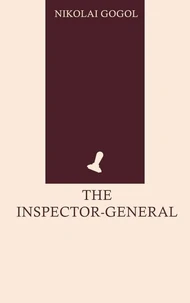
The Inspector-General
E-book
0,49 €
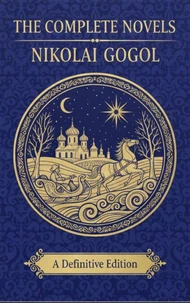
Шинель
E-book
2,99 €