
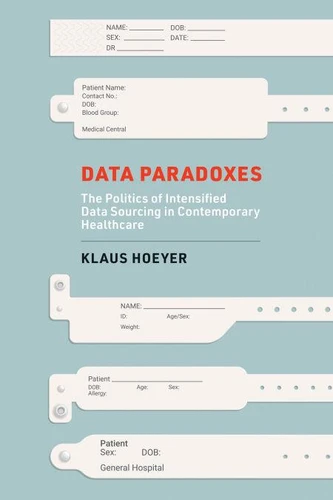
Data Paradoxes. The Politics of Intensified Data Sourcing in Contemporary Healthcare
Par :Formats :
Disponible dans votre compte client Decitre ou Furet du Nord dès validation de votre commande. Le format ePub protégé est :
- Compatible avec une lecture sur My Vivlio (smartphone, tablette, ordinateur)
- Compatible avec une lecture sur liseuses Vivlio
- Pour les liseuses autres que Vivlio, vous devez utiliser le logiciel Adobe Digital Edition. Non compatible avec la lecture sur les liseuses Kindle, Remarkable et Sony
- Non compatible avec un achat hors France métropolitaine
 , qui est-ce ?
Notre partenaire de plateforme de lecture numérique où vous retrouverez l'ensemble de vos ebooks gratuitement
Pour en savoir plus sur nos ebooks, consultez notre aide en ligne ici
C'est si simple ! Lisez votre ebook avec l'app Vivlio sur votre tablette, mobile ou ordinateur :

- Nombre de pages328
- FormatePub
- ISBN978-0-262-37416-3
- EAN9780262374163
- Date de parution18/04/2023
- Protection num.Adobe DRM
- Taille4 Mo
- Infos supplémentairesepub
- ÉditeurThe MIT Press
Résumé
Why healthcare cannot-and should not-become data-driven, despite the many promises of intensified data sourcing. In contemporary healthcare, everybody seems to want more data, of higher quality, on more people, and to use this data for a wider range of purposes. In theory, such pervasive data collection should lead to a healthcare system in which data can quickly, efficiently, and unambiguously be interpreted and provide better care for patients, more efficient administration, enhanced options for research, and accelerated economic growth.
In practice, however, data are difficult to interpret and the many purposes often undermine one another. In this book, anthropologist and STS scholar Klaus Hoeyer offers an in-depth look at the paradoxes surrounding healthcare data. Focusing on Denmark, a world leader in healthcare data infrastructures, Hoeyer shares the perspectives of different stakeholders, from epidemiologists to hospital managers, from patients to physicians, analyzing the social dynamics set in motion by data intensification and calling special attention to that which cannot be easily coded in a database.
HHe illustrates how data can be at once helpful, overwhelming, and sometimes disastrous through concrete examples. The COVID-19 pandemic serves as a special closing case study that shows how these data paradoxes carry weighty political implications. By revealing the diverse and sometimes contradictory practices spawned by intensified data sourcing, Data Paradoxes raises vital questions about how we might better use healthcare data.
In practice, however, data are difficult to interpret and the many purposes often undermine one another. In this book, anthropologist and STS scholar Klaus Hoeyer offers an in-depth look at the paradoxes surrounding healthcare data. Focusing on Denmark, a world leader in healthcare data infrastructures, Hoeyer shares the perspectives of different stakeholders, from epidemiologists to hospital managers, from patients to physicians, analyzing the social dynamics set in motion by data intensification and calling special attention to that which cannot be easily coded in a database.
HHe illustrates how data can be at once helpful, overwhelming, and sometimes disastrous through concrete examples. The COVID-19 pandemic serves as a special closing case study that shows how these data paradoxes carry weighty political implications. By revealing the diverse and sometimes contradictory practices spawned by intensified data sourcing, Data Paradoxes raises vital questions about how we might better use healthcare data.