SOLDES
Jusqu'à -70% sur une sélection d'articles*

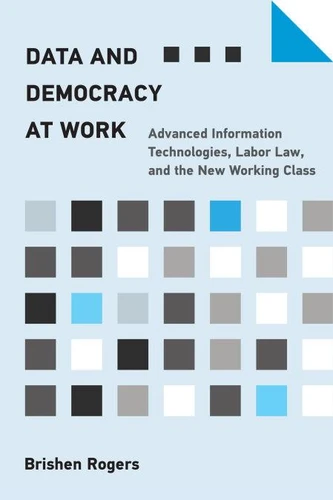
Data and Democracy at Work. Advanced Information Technologies, Labor Law, and the New Working Class
Par :Formats :
Disponible dans votre compte client Decitre ou Furet du Nord dès validation de votre commande. Le format ePub protégé est :
- Compatible avec une lecture sur My Vivlio (smartphone, tablette, ordinateur)
- Compatible avec une lecture sur liseuses Vivlio
- Pour les liseuses autres que Vivlio, vous devez utiliser le logiciel Adobe Digital Edition. Non compatible avec la lecture sur les liseuses Kindle, Remarkable et Sony
- Non compatible avec un achat hors France métropolitaine
 , qui est-ce ?
Notre partenaire de plateforme de lecture numérique où vous retrouverez l'ensemble de vos ebooks gratuitement
Pour en savoir plus sur nos ebooks, consultez notre aide en ligne ici
C'est si simple ! Lisez votre ebook avec l'app Vivlio sur votre tablette, mobile ou ordinateur :

- Nombre de pages304
- FormatePub
- ISBN978-0-262-37336-4
- EAN9780262373364
- Date de parution21/03/2023
- Protection num.Adobe DRM
- Taille367 Ko
- Infos supplémentairesepub
- ÉditeurThe MIT Press
Résumé
An exploration of how major companies have used advanced information technologies to limit worker power, and how labor law reform could reverse that trend. As our economy has shifted away from industrial production and service industries have become dominant, many of the nation's largest employers are now in fields like retail, food service, logistics, and hospitality. These companies have turned to data-driven surveillance technologies that operate over a vast distance, enabling cheaper oversight of massive numbers of workers.
Data and Democracy at Work argues that companies often use new data-driven technologies as a power resource-or even a tool of class domination-and that our labor laws allow them to do so. Employers have established broad rights to use technology to gather data on workers and their performance, to exclude others from accessing that data, and to use that data to refine their managerial strategies. Through these means, companies have suppressed workers' ability to organize and unionize, thereby driving down wages and eroding working conditions.
Labor law today encourages employer dominance in many ways-but labor law can also be reformed to become a tool for increased equity. The COVID-19 pandemic and subsequent Great Resignation have indicated an increased political mobilization of the so-called essential workers of the pandemic, many of them service industry workers. This book describes the necessary legal reforms to increase workers' associational power and democratize workplace data, establishing more balanced relationships between workers and employers and ensuring a brighter and more equitable future for us all.
Data and Democracy at Work argues that companies often use new data-driven technologies as a power resource-or even a tool of class domination-and that our labor laws allow them to do so. Employers have established broad rights to use technology to gather data on workers and their performance, to exclude others from accessing that data, and to use that data to refine their managerial strategies. Through these means, companies have suppressed workers' ability to organize and unionize, thereby driving down wages and eroding working conditions.
Labor law today encourages employer dominance in many ways-but labor law can also be reformed to become a tool for increased equity. The COVID-19 pandemic and subsequent Great Resignation have indicated an increased political mobilization of the so-called essential workers of the pandemic, many of them service industry workers. This book describes the necessary legal reforms to increase workers' associational power and democratize workplace data, establishing more balanced relationships between workers and employers and ensuring a brighter and more equitable future for us all.