SOLDES
Jusqu'à -70% sur une sélection d'articles*

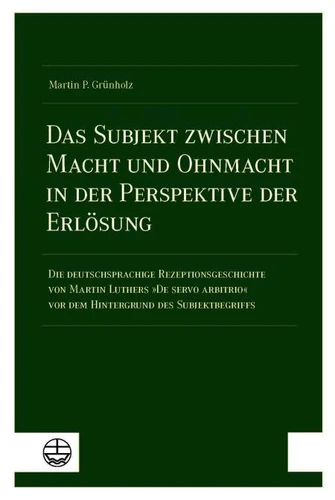
Das Subjekt zwischen Macht und Ohnmacht in der Perspektive der Erlösung. Die deutschsprachige Rezeptionsgeschichte von Martin Luthers »De servo arbitrio« vor dem Hintergrund des Subjektbegriffs
Par :Formats :
Disponible dans votre compte client Decitre ou Furet du Nord dès validation de votre commande. Le format PDF est :
- Compatible avec une lecture sur My Vivlio (smartphone, tablette, ordinateur)
- Compatible avec une lecture sur liseuses Vivlio
- Pour les liseuses autres que Vivlio, vous devez utiliser le logiciel Adobe Digital Edition. Non compatible avec la lecture sur les liseuses Kindle, Remarkable et Sony
 , qui est-ce ?
Notre partenaire de plateforme de lecture numérique où vous retrouverez l'ensemble de vos ebooks gratuitement
Pour en savoir plus sur nos ebooks, consultez notre aide en ligne ici
C'est si simple ! Lisez votre ebook avec l'app Vivlio sur votre tablette, mobile ou ordinateur :

- Nombre de pages444
- FormatPDF
- ISBN978-3-374-07836-3
- EAN9783374078363
- Date de parution28/03/2025
- Protection num.Digital Watermarking
- Taille3 Mo
- Infos supplémentairespdf
- ÉditeurEvangelische Verlagsanstalt
Résumé
Auch 500 Jahre nach der Abfassung von Martin Luthers »De servo arbitrio« (1525) wird das Ringen um die Subjektivität des Menschen kontrovers geführt. Vor dem Hintergrund des Deutschen Idealismus wird Luthers Schrift besonders intensiv diskutiert. Das vorliegende Buch gibt einen Überblick über alle deutschsprachigen akademischen Publikationen zwischen 1860 und 2020 und fragt, wie die Autoren implizit und explizit auf die subjekttheoretischen Fragen ihrer Zeit reagierten und wie sie sich zugleich zu Luthers Überzeugungen stellten.
Abschließend werden vier Thesen formuliert, wie eine Relektüre von »De servo arbitrio« auf die neuzeitlichen Fragen reagieren könnte, die zu einer Versöhnung mit der Endlichkeit führt und eine gnadenhaft zugesprochene Subjektivität beinhaltet. [The Subject between Power and Powerlessness in the Perspective of Redemption. The German-language Reception History of Martin Luther's »De servo arbitrio« in the Context of the Concept of Subjectivism] Even 500 years after the writing of Martin Luther's »De servo arbitrio« (1525), the debate about the subjectivity of human beings remains controversial.
Against the background of German Idealism, Luther's writing is the subject of particularly intense debate. This book provides an overview of all German-language academic publications between 1860 and 2020 and asks how the authors implicitly and explicitly reacted to the subject-theoretical questions of their time and how they simultaneously positioned themselves in relation to Luther's convictions.
Finally, four theses are formulated on how a re-reading of »De servo arbitrio« could respond to modern questions, leading to a reconciliation with finitude and including a subjectivity that is graciously granted.
Abschließend werden vier Thesen formuliert, wie eine Relektüre von »De servo arbitrio« auf die neuzeitlichen Fragen reagieren könnte, die zu einer Versöhnung mit der Endlichkeit führt und eine gnadenhaft zugesprochene Subjektivität beinhaltet. [The Subject between Power and Powerlessness in the Perspective of Redemption. The German-language Reception History of Martin Luther's »De servo arbitrio« in the Context of the Concept of Subjectivism] Even 500 years after the writing of Martin Luther's »De servo arbitrio« (1525), the debate about the subjectivity of human beings remains controversial.
Against the background of German Idealism, Luther's writing is the subject of particularly intense debate. This book provides an overview of all German-language academic publications between 1860 and 2020 and asks how the authors implicitly and explicitly reacted to the subject-theoretical questions of their time and how they simultaneously positioned themselves in relation to Luther's convictions.
Finally, four theses are formulated on how a re-reading of »De servo arbitrio« could respond to modern questions, leading to a reconciliation with finitude and including a subjectivity that is graciously granted.