SOLDES
Jusqu'à -70% sur une sélection d'articles*

Nouveauté
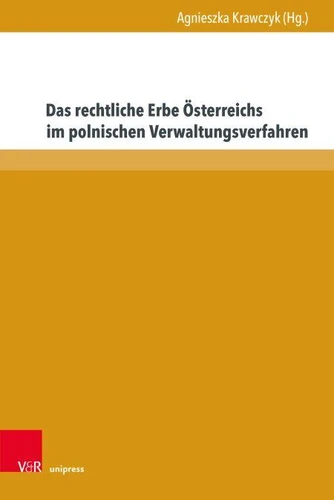
Das rechtliche Erbe Österreichs im polnischen Verwaltungsverfahren. Zum 100-jährigen Jubiläum des Allgemeinen Verwaltungsverfahrensgesetzes (AVG 1925–2025)
Par : , , , ,Formats :
Disponible dans votre compte client Decitre ou Furet du Nord dès validation de votre commande. Le format PDF est :
- Compatible avec une lecture sur My Vivlio (smartphone, tablette, ordinateur)
- Compatible avec une lecture sur liseuses Vivlio
- Pour les liseuses autres que Vivlio, vous devez utiliser le logiciel Adobe Digital Edition. Non compatible avec la lecture sur les liseuses Kindle, Remarkable et Sony
 , qui est-ce ?
Notre partenaire de plateforme de lecture numérique où vous retrouverez l'ensemble de vos ebooks gratuitement
Pour en savoir plus sur nos ebooks, consultez notre aide en ligne ici
C'est si simple ! Lisez votre ebook avec l'app Vivlio sur votre tablette, mobile ou ordinateur :

- Nombre de pages293
- FormatPDF
- ISBN978-3-8470-2004-2
- EAN9783847020042
- Date de parution13/07/2026
- Protection num.pas de protection
- Taille4 Mo
- Infos supplémentairespdf
- ÉditeurV&R Unipress
Résumé
Auch nach 100 Jahren ist das österreichische Allgemeine Verwaltungsverfahrensgesetz (AVG) ein zentraler Referenzpunkt und gibt Impulse für die Fortentwicklung des Individualrechtsschutzes im Verwaltungsverfahren. Der Band zeichnet nach, wie dieses Erbe die polnische Verfahrensordnung prägt, und verbindet historische mit rechtsvergleichenden Perspektiven. Behandelt werden Verfahrensgrundsätze, Stellung der Beteiligten, Begründung und Transparenz behördlicher Entscheidungen, der Verwaltungsbescheid und seine Alternativen, Rechtsmittel und außerordentliche Rechtsbehelfe sowie der Schutz gegen Säumnis und überlange Verfahren.
On the occasion of the centenary of Austria's General Administrative Procedure Act (AVG 1925-2025), this volume analyses how Austrian procedural concepts have influenced Polish administrative procedure and what they may contribute to contemporary reform debates.
Written by Polish and Austrian scholars, it combines historical and comparative perspectives with a focus on current challenges. The contributions address core procedural guarantees: general principles, the position of parties and other participants, reasoning duties and transparency of administrative decisions, the administrative decision and its alternatives, remedies and extraordinary review, and protection against administrative inactivity and excessive length of proceedings.
Written by Polish and Austrian scholars, it combines historical and comparative perspectives with a focus on current challenges. The contributions address core procedural guarantees: general principles, the position of parties and other participants, reasoning duties and transparency of administrative decisions, the administrative decision and its alternatives, remedies and extraordinary review, and protection against administrative inactivity and excessive length of proceedings.