
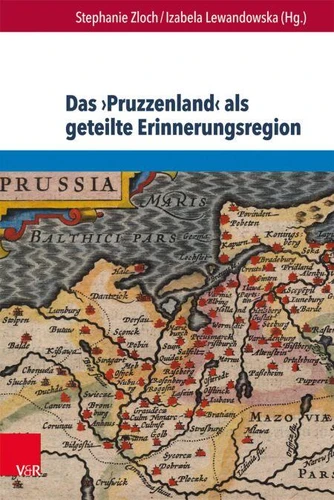
Das ›Pruzzenland‹ als geteilte Erinnerungsregion. Konstruktion und Repräsentation eines europäischen Geschichtsraums in Deutschland, Polen, Litauen und Russland seit 1900
Par : , , , ,Formats :
Disponible dans votre compte client Decitre ou Furet du Nord dès validation de votre commande. Le format PDF est :
- Compatible avec une lecture sur My Vivlio (smartphone, tablette, ordinateur)
- Compatible avec une lecture sur liseuses Vivlio
- Pour les liseuses autres que Vivlio, vous devez utiliser le logiciel Adobe Digital Edition. Non compatible avec la lecture sur les liseuses Kindle, Remarkable et Sony
 , qui est-ce ?
Notre partenaire de plateforme de lecture numérique où vous retrouverez l'ensemble de vos ebooks gratuitement
Pour en savoir plus sur nos ebooks, consultez notre aide en ligne ici
C'est si simple ! Lisez votre ebook avec l'app Vivlio sur votre tablette, mobile ou ordinateur :

- Nombre de pages400
- FormatPDF
- ISBN978-3-8470-0266-6
- EAN9783847002666
- Date de parution14/05/2014
- Protection num.pas de protection
- Taille5 Mo
- Infos supplémentairespdf
- ÉditeurV&R Unipress
Résumé
"Pruzzenland" is a region in north-eastern Europe which has historically been influenced by a diverse range of cultural and multi-ethnic traditions and found itself the subject of competing territorial claims made by Germany, Poland, Lithuania and Russia. The alterations to national borders and the almost wholesale change in the region's population in the aftermath of the Second World War were doubtless the most profound ruptures and transformations faced by the area.
In recent times, issues around remembering and coming to terms with the past have become crucial resources in the search for regional identity in Poland, Lithuania and Russia. This book, spanning the twentieth century and moving beyond it to the present day, represents the first attempt by research in this field to trace, and make an international comparison of, narratives and constructions of identities relating to a region as they appear in textbooks.
The approach taken involves the analysis of mental maps and a focus on seven key topoi: the Pruzzen, Grunwald/Tannenberg/Zalgiris, migration, religions, personalities, the economy and society and landscapes.
In recent times, issues around remembering and coming to terms with the past have become crucial resources in the search for regional identity in Poland, Lithuania and Russia. This book, spanning the twentieth century and moving beyond it to the present day, represents the first attempt by research in this field to trace, and make an international comparison of, narratives and constructions of identities relating to a region as they appear in textbooks.
The approach taken involves the analysis of mental maps and a focus on seven key topoi: the Pruzzen, Grunwald/Tannenberg/Zalgiris, migration, religions, personalities, the economy and society and landscapes.