SOLDES
Jusqu'à -70% sur une sélection d'articles*

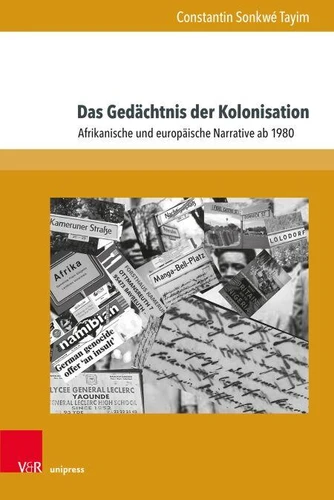
Das Gedächtnis der Kolonisation. Afrikanische und europäische Narrative ab 1980
Par :Formats :
Disponible dans votre compte client Decitre ou Furet du Nord dès validation de votre commande. Le format PDF est :
- Compatible avec une lecture sur My Vivlio (smartphone, tablette, ordinateur)
- Compatible avec une lecture sur liseuses Vivlio
- Pour les liseuses autres que Vivlio, vous devez utiliser le logiciel Adobe Digital Edition. Non compatible avec la lecture sur les liseuses Kindle, Remarkable et Sony
 , qui est-ce ?
Notre partenaire de plateforme de lecture numérique où vous retrouverez l'ensemble de vos ebooks gratuitement
Pour en savoir plus sur nos ebooks, consultez notre aide en ligne ici
C'est si simple ! Lisez votre ebook avec l'app Vivlio sur votre tablette, mobile ou ordinateur :

- Nombre de pages366
- FormatPDF
- ISBN978-3-8470-1719-6
- EAN9783847017196
- Date de parution15/07/2024
- Protection num.pas de protection
- Taille3 Mo
- Infos supplémentairespdf
- ÉditeurV&R Unipress
Résumé
Die vorliegende Studie stellt einen Versuch dar, Diskurse und Gedächtnismodi herauszuarbeiten, die der neueren Diskussion zur Kolonisation zugrunde liegen. Die Studie beantwortet die Frage, wie Kolonialismus in zeitgenössischen Erzählungen zur Kolonialzeit erinnert wird, d.h. in welchen Begriffen Literatur Bezug auf den Kolonialismus nimmt und zu welchem Zweck. Aus dem komparatistischen Vergleich geht hervor, dass die meisten Narrative, ob afrikanische oder europäische, zwar einen postkolonialen Blick auf die koloniale Vergangenheit (ent)werfen, der diskursive Standpunkt der Erzählungen aber weitgehend von dem historisch-kulturellen Gefüge abhängt, aus dem die Texte und deren Autor:innen stammen, wobei einzelne Texte sich über dieses gedächtniskulturelle Paradigma hinwegsetzen.
The study represents an attempt to work out the discourses and modes of remembrance that underlie the recent discussion on colonization.
It deals with the question of how colonialism is remembered in contemporary narratives of the colonial era, i.e. in what terms literature refers to colonialism and for what purpose. The comparative analysis of selected african and european postcolonial narratives shows that while most of them design a postcolonial view of the colonial past, the discursive point of view of those narratives is largely dependent on the cultural-historical structure from which the texts emerged and that informed their authors, though single narratives, especially autobiographical texts by European contemporary witnesses, defy the postcolonial paradigm.
It deals with the question of how colonialism is remembered in contemporary narratives of the colonial era, i.e. in what terms literature refers to colonialism and for what purpose. The comparative analysis of selected african and european postcolonial narratives shows that while most of them design a postcolonial view of the colonial past, the discursive point of view of those narratives is largely dependent on the cultural-historical structure from which the texts emerged and that informed their authors, though single narratives, especially autobiographical texts by European contemporary witnesses, defy the postcolonial paradigm.