SOLDES
Jusqu'à -70% sur une sélection d'articles*

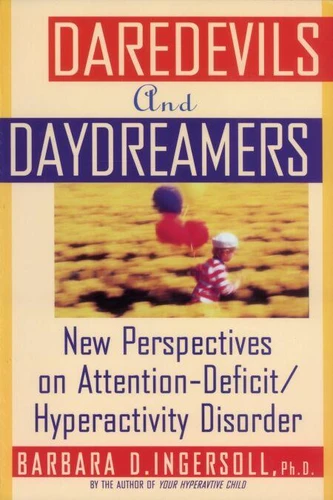
Daredevils and Daydreamers. New Perspectives on Attention-Deficit/Hyperactivity Disorder
Par :Formats :
Disponible dans votre compte client Decitre ou Furet du Nord dès validation de votre commande. Le format ePub protégé est :
- Compatible avec une lecture sur My Vivlio (smartphone, tablette, ordinateur)
- Compatible avec une lecture sur liseuses Vivlio
- Pour les liseuses autres que Vivlio, vous devez utiliser le logiciel Adobe Digital Edition. Non compatible avec la lecture sur les liseuses Kindle, Remarkable et Sony
- Non compatible avec un achat hors France métropolitaine
 , qui est-ce ?
Notre partenaire de plateforme de lecture numérique où vous retrouverez l'ensemble de vos ebooks gratuitement
Pour en savoir plus sur nos ebooks, consultez notre aide en ligne ici
C'est si simple ! Lisez votre ebook avec l'app Vivlio sur votre tablette, mobile ou ordinateur :

- Nombre de pages256
- FormatePub
- ISBN978-0-307-76868-1
- EAN9780307768681
- Date de parution29/12/2010
- Protection num.Adobe DRM
- Taille2 Mo
- Infos supplémentairesepub
- ÉditeurMain Street Books
Résumé
Not so long ago, people thought attention deficit/hyperactivity disorder was a condition that only affected children-- whirling dervishes who careened through life leaving a path of destruction in their wake. We now know, however, that there is a sizeable group of quiet daydreamers whose inability to organize themselves and focus on the task at hand makes it impossible for them to meet the demands of everyday life.
And we know that many children with ADHD continue to have symptoms as adults. But this increased knowledge has sometimes contributed more confusion than clarification. In Daredevils and Daydreamers, Ingersoll--one of the foremost clinicians and researchers in the field--looks at what we've learned in a decade. From obtaining a good diagnosis through the most recent, cutting edge medical and psychological solutions offered, Ingersoll's examples and research have an immediacy missing from the other books in the field.
In addition, she tackles a number of peripheral issues other books ignore such as the problem of the ADHD child in adoptive families, divorced families and step-families, and she handles "real-world" issues (like soiling and bed-wetting) that others disregard.
And we know that many children with ADHD continue to have symptoms as adults. But this increased knowledge has sometimes contributed more confusion than clarification. In Daredevils and Daydreamers, Ingersoll--one of the foremost clinicians and researchers in the field--looks at what we've learned in a decade. From obtaining a good diagnosis through the most recent, cutting edge medical and psychological solutions offered, Ingersoll's examples and research have an immediacy missing from the other books in the field.
In addition, she tackles a number of peripheral issues other books ignore such as the problem of the ADHD child in adoptive families, divorced families and step-families, and she handles "real-world" issues (like soiling and bed-wetting) that others disregard.