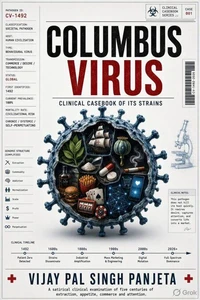
The author is a former national-level MBA entrance exam topper who spent decades inside the very systems this book describes. After years of personal cost, recovery, and relapse, he wrote The First-Step Industry Playbook as a harvesting-prevention manual-for the child who still has a chance to say no.
Nouveauté
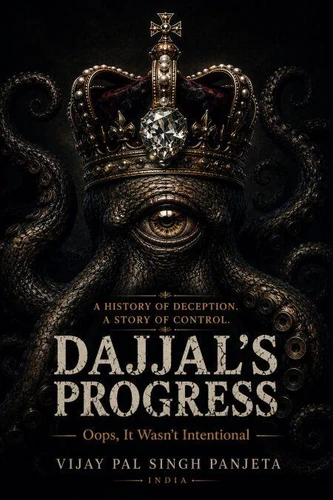
DAJJAL’S PROGRESS Oops, It Wasn’t Intentional
Par :Formats :
Disponible dans votre compte client Decitre ou Furet du Nord dès validation de votre commande. Le format ePub est :
- Compatible avec une lecture sur My Vivlio (smartphone, tablette, ordinateur)
- Compatible avec une lecture sur liseuses Vivlio
- Pour les liseuses autres que Vivlio, vous devez utiliser le logiciel Adobe Digital Edition. Non compatible avec la lecture sur les liseuses Kindle, Remarkable et Sony
 , qui est-ce ?
Notre partenaire de plateforme de lecture numérique où vous retrouverez l'ensemble de vos ebooks gratuitement
Pour en savoir plus sur nos ebooks, consultez notre aide en ligne ici
C'est si simple ! Lisez votre ebook avec l'app Vivlio sur votre tablette, mobile ou ordinateur :

- FormatePub
- ISBN8235499744
- EAN9798235499744
- Date de parution25/08/2026
- Protection num.pas de protection
- Infos supplémentairesepub
- ÉditeurIoakim Ioakim
Résumé
What if the history of addiction is not a history of accidents-but a history of adaptation?For centuries, the language has changed. Opium became commerce. Tobacco became choice. Medicine became treatment. Advertising became persuasion. Fast food became convenience. Social media became connection. Cannabis and DMT became wellness. And whenever the consequences became impossible to ignore, there was always the same convenient explanation:Oops.
It wasn't intentional. Dajjal's Progress follows a disturbing historical pattern from the opium trade and the age of empire through tobacco, pharmaceuticals, wartime distribution, advertising, processed food, opioids, vaping, cannabis, psychedelics and the modern attention economy. The book's central metaphor is an organism: a system that learns, adapts and survives. When one addictive substance becomes politically inconvenient, another appears.
When regulation arrives, the mechanism changes. When public resistance grows, the language changes. What was once called addiction becomes freedom, what was once called manipulation becomes personalization, and what was once called extraction becomes progress. Beginning with the British opium trade in China, the book traces how commerce, political power, medicine, corporate strategy and state policy repeatedly intersect with systems capable of creating dependable demand.
It then follows that pattern into modern America and the wider world-through tobacco, patent medicines, pharmaceutical marketing, wartime nicotine and stimulants, the manufacture of scientific doubt, the opioid crisis, engineered food and the algorithmic capture of human attention. The argument is deliberately provocative. This is not a conventional history of drugs, nor a textbook on addiction. It is a historical commentary on the machinery surrounding addiction-and on the remarkable ability of institutions to rename the same underlying process when the old vocabulary becomes uncomfortable.
Part II turns from chronology to reflection, examining the polite language of modern extraction: the freedom to consume, the generosity of "free" digital platforms, the economics of attention, the export of cultural habits, and the recurring promise that technological progress will somehow solve the consequences of previous progress. The book does not ask whether every company, government or invention is secretly part of one grand conspiracy.
It asks something more uncomfortable:What happens when a system does not need everyone to intend the outcome because the incentives already know how to produce it?And why, after two centuries of remarkably similar patterns, do we continue to call the consequences unintended?Dajjal's Progress is a compact, provocative journey through history, commerce, addiction and power-written for readers who enjoy books that leave an argument in their head long after the final page.
The organism changes its host. The language changes with it. The progress continues.
It wasn't intentional. Dajjal's Progress follows a disturbing historical pattern from the opium trade and the age of empire through tobacco, pharmaceuticals, wartime distribution, advertising, processed food, opioids, vaping, cannabis, psychedelics and the modern attention economy. The book's central metaphor is an organism: a system that learns, adapts and survives. When one addictive substance becomes politically inconvenient, another appears.
When regulation arrives, the mechanism changes. When public resistance grows, the language changes. What was once called addiction becomes freedom, what was once called manipulation becomes personalization, and what was once called extraction becomes progress. Beginning with the British opium trade in China, the book traces how commerce, political power, medicine, corporate strategy and state policy repeatedly intersect with systems capable of creating dependable demand.
It then follows that pattern into modern America and the wider world-through tobacco, patent medicines, pharmaceutical marketing, wartime nicotine and stimulants, the manufacture of scientific doubt, the opioid crisis, engineered food and the algorithmic capture of human attention. The argument is deliberately provocative. This is not a conventional history of drugs, nor a textbook on addiction. It is a historical commentary on the machinery surrounding addiction-and on the remarkable ability of institutions to rename the same underlying process when the old vocabulary becomes uncomfortable.
Part II turns from chronology to reflection, examining the polite language of modern extraction: the freedom to consume, the generosity of "free" digital platforms, the economics of attention, the export of cultural habits, and the recurring promise that technological progress will somehow solve the consequences of previous progress. The book does not ask whether every company, government or invention is secretly part of one grand conspiracy.
It asks something more uncomfortable:What happens when a system does not need everyone to intend the outcome because the incentives already know how to produce it?And why, after two centuries of remarkably similar patterns, do we continue to call the consequences unintended?Dajjal's Progress is a compact, provocative journey through history, commerce, addiction and power-written for readers who enjoy books that leave an argument in their head long after the final page.
The organism changes its host. The language changes with it. The progress continues.