WINNER Canadian Historical Association Indigenous History Book Prize (2022)
WINNER Canadian Historical Association Ontario CLIO Prize (2022)
WINNER Ontario Historical Society Indigenous History Award (2022)
WINNER Manitoba Book Awards Alexander Kennedy Isbister Award for Non-Fiction (2022)
COMMENDED Labriola Center American Indian National Book Award (2021)
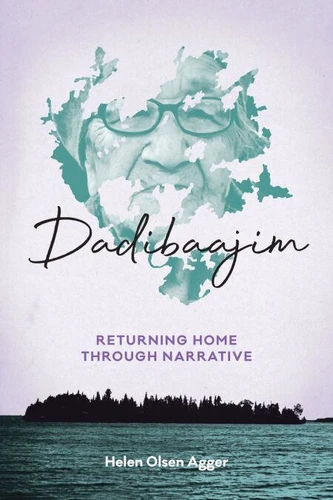
Dadibaajim narratives are of and from the land, born from experience and observation.
Invoking this critical Anishinaabe methodology for teaching and learning, Helen Agger documents and reclaims the history, identity, and inherent entitlement of the Namegosibii Anishinaabeg to the care, use, and occupation of their Trout Lake homelands.
When Agger's mother, Dedibaayaanimanook, was born in 1922, the community had limited contact with Euro-Canadian settlers and still lived throughout their territory according to seasonal migrations along agricultural, hunting, and fishing routes.
By the 1940s, colonialism was in full swing: hydro development had resulted in major flooding of traditional territories, settlers had overrun Trout Lake for its resource, tourism, and recreational potential, and the Namegosibii Anishinaabeg were forced out of their homelands in Treaty 3 territory, north-western Ontario.
Agger mines an archive of treaty paylists, census records, and the work of influential anthropologists like A.
I. Hallowell, but the dadibaajim narratives of eight community members spanning three generations form the heart of this book. Dadibaajim provide the framework that fills in the silences and omissions of the colonial record. Embedded in Anishinaabe language and epistemology, they record how the people of Namegosibiing experienced the invasion of interlocking forces of colonialism and globalized neo-liberalism into their lives and upon their homelands.
Ultimately, Dadibaajim is a message about how all humans may live well on the earth.
WINNER Canadian Historical Association Indigenous History Book Prize (2022)
WINNER Canadian Historical Association Ontario CLIO Prize (2022)
WINNER Ontario Historical Society Indigenous History Award (2022)
WINNER Manitoba Book Awards Alexander Kennedy Isbister Award for Non-Fiction (2022)
COMMENDED Labriola Center American Indian National Book Award (2021)
Dadibaajim narratives are of and from the land, born from experience and observation.
Invoking this critical Anishinaabe methodology for teaching and learning, Helen Agger documents and reclaims the history, identity, and inherent entitlement of the Namegosibii Anishinaabeg to the care, use, and occupation of their Trout Lake homelands.
When Agger's mother, Dedibaayaanimanook, was born in 1922, the community had limited contact with Euro-Canadian settlers and still lived throughout their territory according to seasonal migrations along agricultural, hunting, and fishing routes.
By the 1940s, colonialism was in full swing: hydro development had resulted in major flooding of traditional territories, settlers had overrun Trout Lake for its resource, tourism, and recreational potential, and the Namegosibii Anishinaabeg were forced out of their homelands in Treaty 3 territory, north-western Ontario.
Agger mines an archive of treaty paylists, census records, and the work of influential anthropologists like A.
I. Hallowell, but the dadibaajim narratives of eight community members spanning three generations form the heart of this book. Dadibaajim provide the framework that fills in the silences and omissions of the colonial record. Embedded in Anishinaabe language and epistemology, they record how the people of Namegosibiing experienced the invasion of interlocking forces of colonialism and globalized neo-liberalism into their lives and upon their homelands.
Ultimately, Dadibaajim is a message about how all humans may live well on the earth.

 , qui est-ce ?
