
Prix Nobel de la Physique
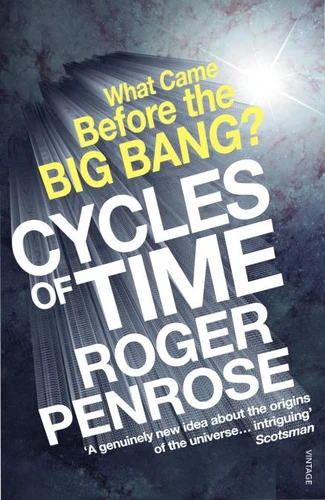
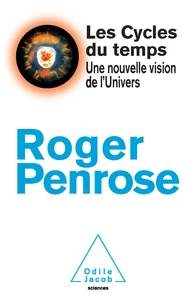
Cycles of Time. An Extraordinary New View of the Universe
Par :Formats :
Disponible dans votre compte client Decitre ou Furet du Nord dès validation de votre commande. Le format ePub protégé est :
- Compatible avec une lecture sur My Vivlio (smartphone, tablette, ordinateur)
- Compatible avec une lecture sur liseuses Vivlio
- Pour les liseuses autres que Vivlio, vous devez utiliser le logiciel Adobe Digital Edition. Non compatible avec la lecture sur les liseuses Kindle, Remarkable et Sony
- Non compatible avec un achat hors France métropolitaine
 , qui est-ce ?
Notre partenaire de plateforme de lecture numérique où vous retrouverez l'ensemble de vos ebooks gratuitement
Pour en savoir plus sur nos ebooks, consultez notre aide en ligne ici
C'est si simple ! Lisez votre ebook avec l'app Vivlio sur votre tablette, mobile ou ordinateur :

- Nombre de pages304
- FormatePub
- ISBN978-1-4464-0221-4
- EAN9781446402214
- Date de parution31/03/2013
- Protection num.Adobe DRM
- Infos supplémentairesepub
- ÉditeurVintage Digital
Résumé
**WINNER OF THE 2020 NOBEL PRIZE IN PHYSICS** What came before the Big Bang? How did the universe begin and must it inevitably end? In this remarkable book Roger Penrose brilliantly illuminates some of the deepest mysteries of the universe. Cycles of Time contains a penetrating analysis of the second law of thermodynamics - according to which the 'randomness' of our world is continually increasing - and a thorough examination of the light-cone geometry of space-time.
It combines these two central themes to show how the expected ultimate fate of our accelerating, expanding universe can actually be reinterpreted as the 'big bang' of a new one. Presenting various standard and non-standard cosmological models, discussing black holes in depth as well as taking in the role of the cosmic microwave background along the way, Roger Penrose argues that the Big Bang was not actually the beginning of everything - nor will it signal the end.
'Science needs more people like Penrose, willing and able to point out the flaws in fashionable models from a position of authority, and to signpost alternative roads to follow' Independent
It combines these two central themes to show how the expected ultimate fate of our accelerating, expanding universe can actually be reinterpreted as the 'big bang' of a new one. Presenting various standard and non-standard cosmological models, discussing black holes in depth as well as taking in the role of the cosmic microwave background along the way, Roger Penrose argues that the Big Bang was not actually the beginning of everything - nor will it signal the end.
'Science needs more people like Penrose, willing and able to point out the flaws in fashionable models from a position of authority, and to signpost alternative roads to follow' Independent
A propos de Roger Penrose
7,60 €
39,00 €
14,00 €
10,00 €
4,18 €

34,00 €
27,50 €

251,50 €
251,50 €
251,50 €
251,50 €
255,50 €