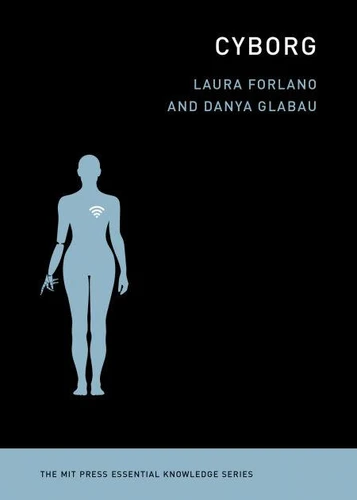
A concise introduction to cyborg theory that examines the way in which technology is situated, political, and embodied. This introduction to cyborg theory provides a critical vantage point for analyzing the claims around emerging technologies like automation, robots, and AI. Cyborg analyzes and reframes popular and scholarly conversations about cyborgs from the perspective of feminist cyborg theory.
Drawing on their combined decades of training, teaching, and research in the social sciences, design, and engineering education, Laura Forlano and Danya Glabau introduce an approach called critical cyborg literacy. Critical cyborg literacy foregrounds power dynamics and pays attention to the ways that social and cultural factors such as gender, race, and disability shape how technology is imagined, developed, used, and resisted.
Forlano and Glabau offer critical cyborg literacy as a way of thinking through questions about the relationship between humanity and technology in areas such as engineering and computing, art and design, and health care and medicine, as well as the social sciences and humanities. Cyborg examines whether modern technologies make us all cyborgs-if we consider, for instance, the fact that we use daily technologies at work, have technologies embedded into our bodies in health care applications, or use technology to critically explore possibilities as artists, designers, activists, and creators.
Lastly, Cyborg offers perspectives from critical race, feminist, and disability thinkers to help chart a path forward for cyborg theory in the twenty-first century.
A concise introduction to cyborg theory that examines the way in which technology is situated, political, and embodied. This introduction to cyborg theory provides a critical vantage point for analyzing the claims around emerging technologies like automation, robots, and AI. Cyborg analyzes and reframes popular and scholarly conversations about cyborgs from the perspective of feminist cyborg theory.
Drawing on their combined decades of training, teaching, and research in the social sciences, design, and engineering education, Laura Forlano and Danya Glabau introduce an approach called critical cyborg literacy. Critical cyborg literacy foregrounds power dynamics and pays attention to the ways that social and cultural factors such as gender, race, and disability shape how technology is imagined, developed, used, and resisted.
Forlano and Glabau offer critical cyborg literacy as a way of thinking through questions about the relationship between humanity and technology in areas such as engineering and computing, art and design, and health care and medicine, as well as the social sciences and humanities. Cyborg examines whether modern technologies make us all cyborgs-if we consider, for instance, the fact that we use daily technologies at work, have technologies embedded into our bodies in health care applications, or use technology to critically explore possibilities as artists, designers, activists, and creators.
Lastly, Cyborg offers perspectives from critical race, feminist, and disability thinkers to help chart a path forward for cyborg theory in the twenty-first century.

 , qui est-ce ?
