
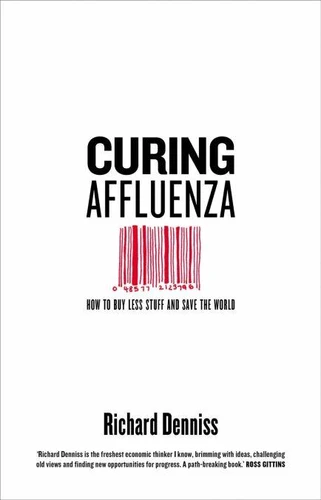
Curing Affluenza. How to Buy Less Stuff and Save the World
Par :Formats :
Disponible dans votre compte client Decitre ou Furet du Nord dès validation de votre commande. Le format ePub est :
- Compatible avec une lecture sur My Vivlio (smartphone, tablette, ordinateur)
- Compatible avec une lecture sur liseuses Vivlio
- Pour les liseuses autres que Vivlio, vous devez utiliser le logiciel Adobe Digital Edition. Non compatible avec la lecture sur les liseuses Kindle, Remarkable et Sony
 , qui est-ce ?
Notre partenaire de plateforme de lecture numérique où vous retrouverez l'ensemble de vos ebooks gratuitement
Pour en savoir plus sur nos ebooks, consultez notre aide en ligne ici
C'est si simple ! Lisez votre ebook avec l'app Vivlio sur votre tablette, mobile ou ordinateur :

- Nombre de pages288
- FormatePub
- ISBN978-1-77113-368-5
- EAN9781771133685
- Date de parution15/02/2018
- Protection num.Digital Watermarking
- Taille625 Ko
- Infos supplémentairesepub
- ÉditeurBetween the Lines
Résumé
Affluenza has not just changed the world, it has also changed the way we see the world. Short of money? Borrow some. Caught in the rain? Buy an umbrella. Thirsty? Buy a bottle of water and throw the bottle away. Our embrace of "convenience" and our acceptance of our inability to plan ahead is an entirely new way of thinking, and over the past seventy years we have built a new and different economic system to accommodate it.
There is nothing inevitable about this current way of thinking, consuming, and producing. On the contrary, the vast majority of humans who have ever lived would find the idea of using our scarce resources to produce things that are designed to be thrown away absolutely senseless. The fact that our consumer culture is a recent innovation does not mean it will be easy to change. Indeed, the last few decades have shown how contagious affluenza can be.
But we have not always lived this way, which proves that we don't have to persist with it. We can change-if we want to.
There is nothing inevitable about this current way of thinking, consuming, and producing. On the contrary, the vast majority of humans who have ever lived would find the idea of using our scarce resources to produce things that are designed to be thrown away absolutely senseless. The fact that our consumer culture is a recent innovation does not mean it will be easy to change. Indeed, the last few decades have shown how contagious affluenza can be.
But we have not always lived this way, which proves that we don't have to persist with it. We can change-if we want to.