SOLDES
Jusqu'à -70% sur une sélection d'articles*

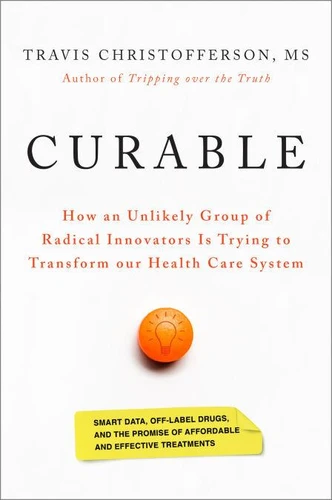
Curable. How an Unlikely Group of Radical Innovators Is Trying to Transform our Health Care System
Par :Formats :
Disponible dans votre compte client Decitre ou Furet du Nord dès validation de votre commande. Le format ePub protégé est :
- Compatible avec une lecture sur My Vivlio (smartphone, tablette, ordinateur)
- Compatible avec une lecture sur liseuses Vivlio
- Pour les liseuses autres que Vivlio, vous devez utiliser le logiciel Adobe Digital Edition. Non compatible avec la lecture sur les liseuses Kindle, Remarkable et Sony
- Non compatible avec un achat hors France métropolitaine
 , qui est-ce ?
Notre partenaire de plateforme de lecture numérique où vous retrouverez l'ensemble de vos ebooks gratuitement
Pour en savoir plus sur nos ebooks, consultez notre aide en ligne ici
C'est si simple ! Lisez votre ebook avec l'app Vivlio sur votre tablette, mobile ou ordinateur :

- Nombre de pages224
- FormatePub
- ISBN978-1-60358-927-7
- EAN9781603589277
- Date de parution03/10/2019
- Protection num.Adobe DRM
- Taille3 Mo
- Infos supplémentairesepub
- ÉditeurChelsea Green
Résumé
Smart metrics, slow thinking, off-label drugs, and a "Moneyball" prescription for fixing modern medicine--by the author of Tripping Over the TruthThe United States is fast becoming the sickest nation in the Western world. Cancer rates continue to rise. There is an epidemic of chronic disease in children. Even with all the money and modern innovations in science, the country's health care system is beyond broken.
Clearly there is a glitch in the system. But what if the solution has been here all along, and we've just been too blind to see it?In Curable journalist and health care advocate Travis Christofferson looks at medicine through a magnifying glass and asks an important question: What if the roots of the current US health care crisis are psychological and systemic, perpetuated not just by corporate influence and the powers that be, but by you and me? It is now known that human perception is based on deeply entrenched patterns of irrational thought, which we attach ourselves to religiously.
So how does this implicate the very scientific research and data that doctors rely on to successfully treat their patients?A page-turning inquiry into a "moneyball approach to medicine, " Curable explores the links between revolutionary baseball analytics; Nobel Prize-winning psychological research on confirmation bias; wildly successful maverick economic philosophy; the history of the radical mastectomy and the rise of the clinical trial; cutting edge treatments routinely overlooked by regulatory bodies; and outdated medical models that prioritize profit over prevention.
As stark as things are, Christofferson asks us to see health care not as a toppling house of cards, but as a badly organized system that is inherently fixable. How do we fix it? First we must reframe the conflict between doctors' intuition and statistical data. Then we must design better systems that can support doctors who are increasingly overwhelmed with the complexity of modern medicine. Curable outlines the future of medicine, detailing brilliant examples of new health care systems that prove we can do better.
It turns out we have more control over our health (and happiness) than we think.
Clearly there is a glitch in the system. But what if the solution has been here all along, and we've just been too blind to see it?In Curable journalist and health care advocate Travis Christofferson looks at medicine through a magnifying glass and asks an important question: What if the roots of the current US health care crisis are psychological and systemic, perpetuated not just by corporate influence and the powers that be, but by you and me? It is now known that human perception is based on deeply entrenched patterns of irrational thought, which we attach ourselves to religiously.
So how does this implicate the very scientific research and data that doctors rely on to successfully treat their patients?A page-turning inquiry into a "moneyball approach to medicine, " Curable explores the links between revolutionary baseball analytics; Nobel Prize-winning psychological research on confirmation bias; wildly successful maverick economic philosophy; the history of the radical mastectomy and the rise of the clinical trial; cutting edge treatments routinely overlooked by regulatory bodies; and outdated medical models that prioritize profit over prevention.
As stark as things are, Christofferson asks us to see health care not as a toppling house of cards, but as a badly organized system that is inherently fixable. How do we fix it? First we must reframe the conflict between doctors' intuition and statistical data. Then we must design better systems that can support doctors who are increasingly overwhelmed with the complexity of modern medicine. Curable outlines the future of medicine, detailing brilliant examples of new health care systems that prove we can do better.
It turns out we have more control over our health (and happiness) than we think.