
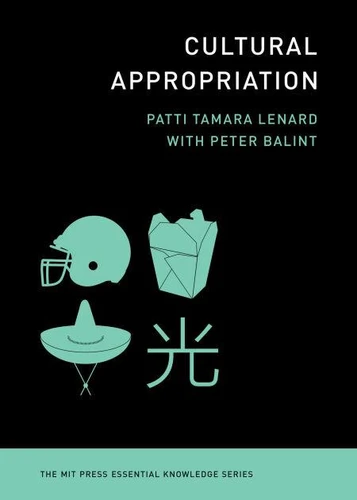
Cultural Appropriation
Par :Formats :
Disponible dans votre compte client Decitre ou Furet du Nord dès validation de votre commande. Le format ePub protégé est :
- Compatible avec une lecture sur My Vivlio (smartphone, tablette, ordinateur)
- Compatible avec une lecture sur liseuses Vivlio
- Pour les liseuses autres que Vivlio, vous devez utiliser le logiciel Adobe Digital Edition. Non compatible avec la lecture sur les liseuses Kindle, Remarkable et Sony
- Non compatible avec un achat hors France métropolitaine
 , qui est-ce ?
Notre partenaire de plateforme de lecture numérique où vous retrouverez l'ensemble de vos ebooks gratuitement
Pour en savoir plus sur nos ebooks, consultez notre aide en ligne ici
C'est si simple ! Lisez votre ebook avec l'app Vivlio sur votre tablette, mobile ou ordinateur :

- Nombre de pages240
- FormatePub
- ISBN978-0-262-05278-8
- EAN9780262052788
- Date de parution31/03/2026
- Protection num.Adobe DRM
- Taille226 Ko
- Infos supplémentairesepub
- ÉditeurThe MIT Press
Résumé
What cultural appropriation is, how it is deployed in public discourse, and if and when it is harmful. What exactly is cultural appropriation? At one extreme are those commentators who suggest that any borrowing of elements outside of one's own culture is cultural appropriation, and therefore, always wrong; at the other extreme, are those who argue that the history of human civilization just is cultural exchange, and therefore, never wrong.
This book offers a clear and straightforward account of what cultural appropriation is, how it is deployed in public discourse, and if and when it is wrong. Patti Tamara Lenard and Peter Balint define cultural appropriation as the non-consensual, knowing (or culpably ignorant) taking of something of cultural value, usually a symbol or a practice, to others. Alleged acts of cultural appropriation generate substantial contestation in public discourse.
But the fact of contestation, over whether an act is in fact cultural appropriation, is not sufficient to mean that someone has done something wrong and thereby merits criticism. The authors show that there are particular conditions-including power imbalances and potential profit at the expense of the cultural group-under which cultural appropriation is inarguably wrong, and therefore, worthy of criticism.
This book offers a clear and straightforward account of what cultural appropriation is, how it is deployed in public discourse, and if and when it is wrong. Patti Tamara Lenard and Peter Balint define cultural appropriation as the non-consensual, knowing (or culpably ignorant) taking of something of cultural value, usually a symbol or a practice, to others. Alleged acts of cultural appropriation generate substantial contestation in public discourse.
But the fact of contestation, over whether an act is in fact cultural appropriation, is not sufficient to mean that someone has done something wrong and thereby merits criticism. The authors show that there are particular conditions-including power imbalances and potential profit at the expense of the cultural group-under which cultural appropriation is inarguably wrong, and therefore, worthy of criticism.