SOLDES
Jusqu'à -70% sur une sélection d'articles*

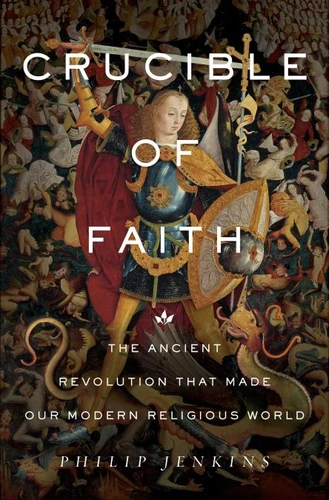
Crucible of Faith. The Ancient Revolution That Made Our Modern Religious World
Par :Formats :
Disponible dans votre compte client Decitre ou Furet du Nord dès validation de votre commande. Le format ePub protégé est :
- Compatible avec une lecture sur My Vivlio (smartphone, tablette, ordinateur)
- Compatible avec une lecture sur liseuses Vivlio
- Pour les liseuses autres que Vivlio, vous devez utiliser le logiciel Adobe Digital Edition. Non compatible avec la lecture sur les liseuses Kindle, Remarkable et Sony
- Non compatible avec un achat hors France métropolitaine
 , qui est-ce ?
Notre partenaire de plateforme de lecture numérique où vous retrouverez l'ensemble de vos ebooks gratuitement
Pour en savoir plus sur nos ebooks, consultez notre aide en ligne ici
C'est si simple ! Lisez votre ebook avec l'app Vivlio sur votre tablette, mobile ou ordinateur :

- Nombre de pages336
- FormatePub
- ISBN978-0-465-09641-1
- EAN9780465096411
- Date de parution18/09/2017
- Protection num.Adobe DRM
- Infos supplémentairesepub
- ÉditeurBasic Books
Résumé
One of America's foremost scholars of religion examines the tumultuous era that gave birth to the modern Judeo-Christian tradition In The Crucible of Faith, Philip Jenkins argues that much of the Judeo-Christian tradition we know today was born between 250-50 BCE, during a turbulent "Crucible Era." It was during these years that Judaism grappled with Hellenizing forces and produced new religious ideas that reflected and responded to their changing world.
By the time of the fall of the Temple in 70 CE, concepts that might once have seemed bizarre became normalized-and thus passed on to Christianity and later Islam. Drawing widely on contemporary sources from outside the canonical Old and New Testaments, Jenkins reveals an era of political violence and social upheaval that ultimately gave birth to entirely new ideas about religion, the afterlife, Creation and the Fall, and the nature of God and Satan.
By the time of the fall of the Temple in 70 CE, concepts that might once have seemed bizarre became normalized-and thus passed on to Christianity and later Islam. Drawing widely on contemporary sources from outside the canonical Old and New Testaments, Jenkins reveals an era of political violence and social upheaval that ultimately gave birth to entirely new ideas about religion, the afterlife, Creation and the Fall, and the nature of God and Satan.