
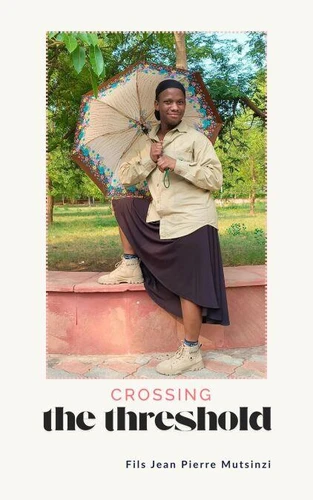
Crossing the Threshold. Becoming Visible
Par :Formats :
Disponible dans votre compte client Decitre ou Furet du Nord dès validation de votre commande. Le format ePub est :
- Compatible avec une lecture sur My Vivlio (smartphone, tablette, ordinateur)
- Compatible avec une lecture sur liseuses Vivlio
- Pour les liseuses autres que Vivlio, vous devez utiliser le logiciel Adobe Digital Edition. Non compatible avec la lecture sur les liseuses Kindle, Remarkable et Sony
 , qui est-ce ?
Notre partenaire de plateforme de lecture numérique où vous retrouverez l'ensemble de vos ebooks gratuitement
Pour en savoir plus sur nos ebooks, consultez notre aide en ligne ici
C'est si simple ! Lisez votre ebook avec l'app Vivlio sur votre tablette, mobile ou ordinateur :

- FormatePub
- ISBN8231120383
- EAN9798231120383
- Date de parution12/07/2025
- Protection num.pas de protection
- Infos supplémentairesepub
- ÉditeurWalzone Press
Résumé
Does the body have a script or is it merely performing one? Crossing the Threshold is a philosophical interrogation into the structural conditioning of gender and the mechanics of visibility. Documenting a radical autoethnographic experiment where the body becomes a site of disruption, this work moves beyond mere observation into a profound systemic critique. The author, a male researcher in a conservative institutional setting, deliberately disrupts social codes by wearing a skirt in public spaces to expose how gender is not fixed but regulated by society. By weaving raw embodied testimony with the theories of Judith Butler, Martin Buber, and Jacques Lacan, the text unmasks how institutional environments weaponize the gaze to enforce obedience and punish deviance.
It exposes the internal and external thresholds crossed when the self refuses to be a silent observer of its own restriction. This is not just a study of clothing. It is an urgent call for a systemic transformation toward empathy and the radical reclamation of human dignity.
It exposes the internal and external thresholds crossed when the self refuses to be a silent observer of its own restriction. This is not just a study of clothing. It is an urgent call for a systemic transformation toward empathy and the radical reclamation of human dignity.