SOLDES
Jusqu'à -70% sur une sélection d'articles*

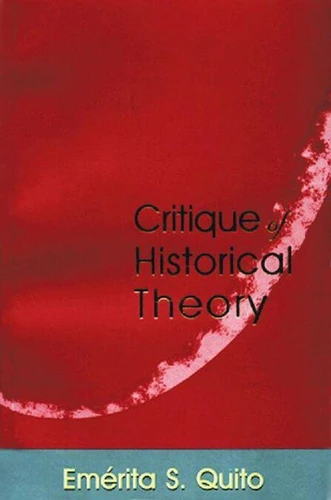
Critique of Historical Theory
Par :Formats :
Disponible dans votre compte client Decitre ou Furet du Nord dès validation de votre commande. Le format ePub protégé est :
- Compatible avec une lecture sur My Vivlio (smartphone, tablette, ordinateur)
- Compatible avec une lecture sur liseuses Vivlio
- Pour les liseuses autres que Vivlio, vous devez utiliser le logiciel Adobe Digital Edition. Non compatible avec la lecture sur les liseuses Kindle, Remarkable et Sony
- Non compatible avec un achat hors France métropolitaine
 , qui est-ce ?
Notre partenaire de plateforme de lecture numérique où vous retrouverez l'ensemble de vos ebooks gratuitement
Pour en savoir plus sur nos ebooks, consultez notre aide en ligne ici
C'est si simple ! Lisez votre ebook avec l'app Vivlio sur votre tablette, mobile ou ordinateur :

- FormatePub
- ISBN978-971-27-2736-8
- EAN9789712727368
- Date de parution03/10/2017
- Protection num.Adobe DRM
- Infos supplémentairesepub
- ÉditeurAnvil Publishing, Inc.
Résumé
This work is essentially a philosophy of history. The author's research on this topic spans more than three decades. Part One of this book has three chapters. Chapter I is divided into seven sections featuring philosophers who see a plan in history. Chapter II is divided into two sections featuring those who do not see a plan in history. Chapter III is divided into three sections featuring scientists whose ideas are relevant to the philosophy of history.
Part Two is divided into four chapters. The first three chapters feature the three philosophers of history-Arnold Toynbee, Jean-Paul Sartre and William Dilthey-who stand out in the 20th century for their uncommon stance. The fourth chapter discusses the relationship between the Philosophy of Man and the Philosophy of History. Finally, Part Three is the Critique. While the philosophers mentioned here have written several volumes, only their ideas relevant to the philosophy of history are discussed.
Part Two is divided into four chapters. The first three chapters feature the three philosophers of history-Arnold Toynbee, Jean-Paul Sartre and William Dilthey-who stand out in the 20th century for their uncommon stance. The fourth chapter discusses the relationship between the Philosophy of Man and the Philosophy of History. Finally, Part Three is the Critique. While the philosophers mentioned here have written several volumes, only their ideas relevant to the philosophy of history are discussed.